Erin Lyndal Martin Interviews Susan About The Creation of Anne Boleyn

images-9Earlier this week, Erin Lyndal Martin interviewed Susan for a piece that appeared in the online magazine “Bitch.” While only a few of the questions were used, we knew that many would be curious about the full interview. Enjoy!

What did you not get to include in your book that you wanted to?

There are lots of interesting books and movies that I didn’t discuss, but my goal was to focus on the cultural “highlights.”  After six years of touring the historical, literary and media-depictions of Anne, I think I had a pretty good sense of what I wanted to include and what needed to be put to the side in the interests of the narrative.  I could have written much more, for example (and now that I think about it, at one point I did!) on representations of “the bitch” in contemporary culture.  But it started to feel like a whole other book, so with some sadness but no regret I cut it out. 

I was struck by your use of the terms “erasure” and “revision” to describe the period after Anne’s execution and before Jane Seymour’s arrival.  Those terms highlight the way Anne is a narrative (or a set of narratives) in addition to being a historical figure. How did you choose those terms?

That’s a great observation, and really gets at one of the main ideas of the book, which is that Anne Boleyn is, in many ways, less a historical figure than a set of (ever-changing) cultural images and narratives.  Of course, she actually existed, she actually gave birth to Elizabeth, she actually was beheaded.  But we know so little about her personality and character that hasn’t been filtered through the tongues and pens of enemies (and some friends), have virtually nothing in her own words (I think I will sooner forgive Henry for beheading her than for destroying her letters) (JK), and the myths, stereotypes, and encrusted narratives have virtually swamped the little that can be justified through the historical record.  She is, in many ways, a missing person—but one about whom we think we know so, so much.  In the end, what we think we know winds up revealing more about “us” than about Anne herself.

Do you believe the theory about Henry and Mary being involved? If so, why didn’t Henry marry Mary?

I do believe that they were involved.  But whether or not he was involved with Mary, we know that no other mistresses before Anne were considered as a prospective wife (including Elizabeth Blount, with whom he had a male child.)  The tantalizing question, actually, is not so much “why not them?” but “why Anne?”  I devout a whole chapter to speculating (because that’s all that we can do) about that.
What fictionalized depiction do you like best?

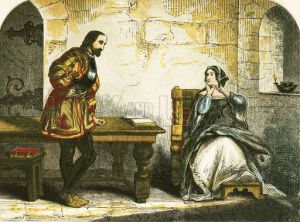
Hands down, my favorite fictional Anne is the Boleyn of “Anne of the Thousand Days”, if for no other reason than for her speech to Henry in the Tower as she is awaiting execution.  It never happened, of course—it’s total invention—but it should have! As far as historical fiction goes, I don’t have one favorite; I love the way Anne changes in them through the centuries.   A few of the authors I have special affection for:  Margaret Barnes, Mary Hastings Bradley, Jean Plaidy, Robin Maxwell, Nell Gavin, Norah Lofts.

What is your favorite thing about Boleyn?

 I’ve always been attracted to women who seem to have been misunderstood in their own times, but come to “speak” to later generations.  Anne was surely one of those women!!  But if I had to name one quality that is most appealing to me, it would have to be what seems to have been an ironic, somewhat “dark,” and highly attuned sense of how political her world was.  We only have fragments that suggest this—her sharp, skeptical reactions to Constable Kingston’s mealy-mouthed reassurances in the tower, and her amazing trial speech, in which she confessed only to not having had “perfect humility” with Henry—but these tiny bits speak volumes to me about what set her off from other women at court.  She wasn’t a great beauty (the media to the contrary) but she seems to have been so conscious, and (by her own admission) so unwilling to remain silent about what she felt and thought.  And from her trial speech, it appears that she knew that was one of the main reasons for her fall.


You talk briefly of Henry being the “spare heir.” How do you think that influenced his reign?

Henry was raised in a highly protective atmosphere—and mostly by his mother (unlike Arthur, who was reared to be king from the get-go).  It was a stifling upbringing in many ways—for everyone was highly aware that should Arthur die, Henry would have to step forward, and they weren’t about to subject Henry to any of life’s dangers that could be avoided.  It was also a much more “feminized” upbringing than Arthur got.  That is, more emphasis on literature, poetry, the traditions of courtly love, much more time devoted to reading, thinking. So you had this very interesting combination of qualities come to the fore when he ultimately became king.  His suppressed “masculine” energy burst forth full force—he was tremendously athletic, impulsive, risk-taking.  But at the same time, he cultivated the friendship of More, Erasmus, and other humanist intellectuals, wrote music, loved learning, and had a highly romantic streak.  It was a pretty winning combination—for a while!!!

You also mention Henry being more egalitarian than his contemporaries (if such a word can be used).   In what other ways was Henry different than other men of his time?

I don’t actually use that word, for I don’t think he was egalitarian according to any modern understanding of that word.  What I do suggest is that he may have had fewer of the standard misogynist ideas about the inferior intellectual nature of women, and less knee-jerk aversion to women’s advice, guidance, etc.  And I suggest that this may have been the result of being raised by a very strong woman (who operated almost as a single parent with him.)  The fact that he was so attracted to a woman like Anne, whom many other men at court saw as an interfering harpy, suggests that at least at this stage in his life he didn’t have as limited an idea of a woman’s “place.” As far as other differences from men of his time, that would require much more room than I have here, as so many aspects of his life made him “different”: the fact of being king, for one, and then too (as I argue in the book), he had a very black and white view of things, especially as he got older.  Perhaps it developed as a result of being constantly deferred to, perhaps it was simply his personality type, perhaps (as Kyra Kramer suggests in “Blood Will Tell”) he suffered from a genetic disorder that radically affected his moods.  Whatever the source, in Henry’s world, you were either for him or against him.  No in-between.  When he loved you, the sun beamed down on you.  But cross him even a little bit, and very threatening clouds would form.  And the weather could change in an instant! 

Is the feminist appropriation of Anne Boleyn dangerous in any way?

I’m not sure what that would mean. “Danger” seems a bit strong a term to me. I do think that idealizing anyone to the point of enshrining them, whether for feminist reasons or otherwise, is ultimately to do them a disservice.  For eventually, there’s going to be backlash against what others will see as an ideological bias—and then human complexity will yield to a battle between the “fors” and the “againsts.”  Indeed, that’s largely what has happened with Anne.  Her catholic enemies demonized her.  Then her protestant “rehabilitators” turned her into a martyr.  Early historians, wanting to de-sanctify her, went too far in to the other direction and—relying largely on highly biased documents from Anne’s time–turned her into a scheming, ambitious temptress.  Which naturally has provoked the ire of feminists.  And on and on it goes.

How much influence do you think Anne or her politics had on Elizabeth?

I’m not qualified to answer this question, as my knowledge of Elizabeth is limited.  But without even knowing anything about Elizabeth, one can safely say that Anne had an enormous influence on Elizabeth’s life simply by playing such a pivotal role in the Protestant Reformation. Beyond that, I would refer interested readers to Tracy Borman’s book “Elizabeth’s Women,” which has a chapter on Anne.

You get into the age-old question of Henry and Anne’s sex life, like which of them said no and held out the longest. Do you think that matters in a larger sense?

We will never know, and to the extent that the same waiting game would have been played out no matter who “held out,” it really doesn’t make a difference—to history.  Where it does make a difference is in our perception of Anne.  The standard narrative has her withholding her favors in order to manipulate Henry into marriage.  Obviously, if it was Henry who wanted to wait, that scenario goes out the window.  My own view is that they both were invested in waiting until they were close to marriage, so their children would unquestionably be legitimate. In his letters, Henry was quite amorous—but it was in the tradition of courtly wooing to be quite seductive with words without necessarily urging any action.  We don’t have Anne’s letters, but there’s no evidence beyond Henry’s unfulfilled ardor (which doesn’t prove anything) that she was behaving in a “tempting” fashion.  That’s all part of the mythology, much of which can be laid at the feet of the “anti-Anne” faction at court (and later.)

1 Comment

Filed under Uncategorized

Viral Anne

You know you are a pop-culture internet queen when your name is connected with the cats at "I Can Has Cheezburger?"

You know you are a pop-culture internet queen when your name is connected with the cats at “I Can Has Cheezburger?”

This excerpt from Susan’s book discusses “Viral Anne”–the Websites and Facebook pages devoted to Boleyn and/or The Tudors. She asks that those who are mentioned remember that her book went into production over a year ago, and thus doesn’t reflect activity (such as the publication of books by Claire Ridgway and Sylwia Zupanec, and the appearance of several newer websites) that happened since then. She also reminds interviewees and other contributors to The Creation of Anne Boleyn Facebook page that many of them are quoted in other sections of the book. And finally, she hopes you all understand that it was unavoidable that many great sites have not been mentioned; if she had discussed them all, it would have been a book in itself!

…[T]he electronic community of Tudorphiles…emerged out of the tentative seedings of long-time Tudor fans, and after The Tudors caught hold, sprouted limbs and shoots all across the internet.  Lara Eakins, whose tudorhistory.org was among the first, began in 1994 with “a little GIF of Elizabeth I” and a “very simple page about the Tudors.”  Lara’s initial impulse, as she describes it, was just to share: “here’s something that interests me.”  She was surprised when numerous emails began arriving, some asking for help with school assignments, but many from people for whom the Tudors had been a secret passion.  “I thought I was the only one interested in Tudor history!” wrote some; “My friends and family are tired of me talking about it.”  Now they would have a place to indulge freely without driving others away. Lara began to suspect that her site had tapped into a community of Tudor fans, each thinking he or she was the “only one.”  Then, the publication of The Other Boleyn Girl  turned Anne Boleyn into “one of the biggest topics of interest” among the followers of her Q and A page, and “once The Tudors started, the questions started flooding in.”  Many were interested in sorting out fact from fiction in Gregory’s novel and the television show, and that delighted Lara.  “It was nice to know that there is at least some fraction who will dig deeper and try to learn more about the actual history.”

Along with pre-publicity for The Tudors, Showtime created a number of websites in 2007, one of which was a wikilike Wikipedia, a compendium of knowledge built by viewers themselves.  In addition to informational postings about the show and Tudor history, the moderators posted questions soliciting readers’ opinions. Discussions ranged from the historical controversies which had engaged longtime Tudor scholars—Was Anne born in 1501 or 1507? Did she sleep with her first love Henry Percy? Was her last stillbirth deformed? etc.—to playful questionnaires such as “If Henry’s wives were alive today, what job would they have?”, ”What magazines would they read?” and so on.  Participants, at one point, were asked to submit the question they would most want to ask Anne, if she were contacted in a séance.   Their questions reveal their personal engagement, even sympathetic identification, with Anne: “Was Henry good in bed?” “Did you really have extra toes and fingers?” “If you had to do your life again would you marry the king if you knew all we know today?””Do you think you had an impact in your daughter’s life?” “How did you find the strength to endure the trial and imprisonment without any support from your family?”,“Did the beheading hurt?”

Not everyone was a fan of Anne’s, however.  Claire Ridgway, who started The Anne Boleyn Files in 2009, encountered a good deal of hatred of Anne and by extension, her site: “Being someone who runs an Anne Boleyn site has left me open to abuse, offensive emails, and even death threats because I dare to defend a woman who for some really is the ‘scandal of Christendom.’”  Either encouraged or angered by The Tudors’ tendency to sanctify Katherine and Jane Seymour, “Team Boleyn” members and “Team Aragon/Team Seymour” members became mean, squabbling girls themselves. Sue Booth, one of the first moderators  of the Tudors Wiki, was struck by “fierce loyalties” that arose among the members of the Katherine of Aragon and Anne Boleyn “camps.” “It never ceased to amaze me,” she recalls, “how strongly these women felt about something that happened over 400 years ago.”  Natalie Sweet, who joined the Wiki in 2008 while she was studying for a master’s degree in history, remembers these battles as proving the truth of the comment made by sportswriter Clay Travis that “the dark corners of the internet message board made talk radio seem like a mid-day stroll in a well-kept garden.”  Viewers, encouraged by the obscurity of internet conversations, didn’t hold back on slinging mud at each other, and for moderators of the site, it became a “challenge maintaining the line between constructive criticism and negative character bashing.” Barb Alexander, who runs The Tudor Tudor, is puzzled by all this: “I can never figure out why there is such a ‘fangirl’ or ‘bully’ attitude toward any of these people—they have been dead for about 500 years! I like to see an educated passion for a historical figure, and if that figure is not your cup of tea, a respectful disagreement is fine.  But they lived centuries ago, in a different climate than ours, and so I don’t feel it’s fair to judge them nor their actions by modern standards.”  That may be true, but it’s never stopped writers from the 17th, 18th, 19th, or 20th centuries from taking sides; why should it be any different now?

Despite the wife fights, the Tudors Wiki was Natalie Sweet’s  “sanity” during graduate school, and taught her that she should “never discredit the research and knowledge of another just because she did not hold a history degree…and who made me a better historian for the perspectives they provided to me.” Undoubtedly the most convincing proof of that statement is The Anne Boleyn Files.  Although it began as “just a blog’ that Claire was writing for herself—a “journal of my journey into finding out more about Anne Boleyn…people started finding me and commenting on the site. I was blown away! There were other people out there who were just as fascinated by Anne! My research became all consuming, a passion that had taken hold, and by the summer of 2009 I had given up my freelance writing career and was researching Tudor history on a full-time basis, I’ve never looked back!”  Today, 23,000 people visit the site each month, and in response to reader demand, it has become much more than “just a blog.” The Anne Boleyn Files provides links to other sites where one can purchase books and Tudor themed products, buy such items as replicas of Anne’s famous “B” necklace and pajamas and hoodies with her image on them, and sign up for yearly events such as the  “Anne Boleyn Experience Tour.”  It is also a clearing-house for every kind of Tudor resource. Claire’s own “journey,” too, has evolved. Just in the few years I’ve been following the site, I’ve seen her blossom from a respectful reporter of the theories of published authors to an investigative historical journalist whose blog—recently made available in book form–is more rigorous than that of many professional historians.

An International Community of Myth-Busters, Inspired by a Television Show

It’s not surprising that, with the exception of Tudorhistory.org, the Tudor websites and Facebook pages postdate the April 2007 premiere of The Tudors, and that some of the most popular sites were begun after the record-breaking second season finale, in June 2008, in which Anne’s execution drew 852,000 viewers—83% above the numbers for the season one finale.  Google trends records a dramatic peak in surfers for “Anne Boleyn” during 2008.   But even after the second-season finale, the numbers do not return to their pre-Tudors levels, and sites continue to flourish—among them Barb Alexander’s delightfully “cheeky guide to the Tudor dynasty,” The Tudor Tutor, and Natalie Grueninger’s “On The Tudor Trail,” which began as a place to document surviving locations that Anne Boleyn had once visited, and now has grown to include interviews with authors and historians, its own line of Anne inspired greeting cards, and plans to lead a tour, “In the Footsteps of Anne Boleyn.”

The Tudor Facebook pages and websites constitute an international community of Tudor scholars, many of them disappointed by the lack of available materials and discussion in their home countries.  Jessica Prestes, who is Brazilian, was introduced to the Tudors at the age of 11, when her history teacher took the class to watch the movie Elizabeth.  But at the time she knew nothing about the story of Anne Boleyn, only that Henry VIII was Elizabeth’s father. After “The Tudors” premiered, however, Anne became her “obsession.”  She’s now a graduate student in history who runs several facebook pages and sites with an international following.  Sarah Bryson, in Australia, was having trouble finding people with an interest in Tudor history there; today, her Internet site and Facebook page is one of the most personally engaging, with reviews of the latest books alternating with warm conversations among members. Sylwia Sobczak Zupanec has been fascinated by Anne since she was thirteen, but with little information available in Polish, she was frustrated.  Noticing the historical inaccuracies of The Tudors, she started purchasing books in English about Anne, and joined a Polish forum about the show.  ’And then I thought: why not start my own website, where I could write about Anne and the Tudor period in Polish language?”  Sylvia started her website—the only website about Anne Boleyn in Polish–in 2010.   It ultimately led to Sylwia creating a sister site and a Facebook page in English.

The Tudor websites and Facebook pages are far from being just ‘fan pages.’ Because most of those who run them are not professional historians (although some are graduate students in history, and many are writing books), they are freer to allow curiosity and skepticism—rather than the demands of specialization or publication—to guide their thinking.  Each new book, media presentation, public controversy immediately becomes a subject of review and debate.  And because the nature of the sites is collective exploration, particular issues are much more rapidly and thoroughly explored than they typically are in academic forums.  Poked and prodded by members, who together constitute a phenomenally well-read critical community, these sites have become think tanks of Tudor research, questioning some of the most entrenched myths, raising serious issues about documentation, and delving into issues that only appear as footnotes in the scholarly literature. In many ways, they operate as the critical conscience of published Tudor research.  A few prominent examples: Ridgway has exposed numerous scholarly soft-spots in Alison Weir’s book about Mary Boleyn, Grueninger led a rigorous investigation into the historical meaning of the color yellow (which sources have claimed Anne and Henry wore after Katherine’s death), Zupanec was the first to notice that a famous quote about Anne attributed to Francis I and endlessly recyled in much of the literature has never actually been documented in any of the books that cite it.  She presented her research and spearheaded a collective exploration that, despite the efforts of many scholars in many fields, has yet been able to validate the quotation. These critical investigations are the stuff of scholarly findings of significance and potential widespread interest.

7 Comments

Filed under Anne Through the Ages, Book Excerpts

Anne Boleyn: A Cultural Timeline

AnneMay 19, 1536:  Anne Boleyn, convicted of treason, adultery, and incest, becomes the first Queen in English history to be executed.  She dies with many enemies, mostly Catholic, who describe her as a scheming harpy, “goggle-eyed whore” and Lutheran heretic, who ensnared Henry with her French ways.

Yet even just a few hours after the execution, with Henry already cavorting publicly with his newly betrothed Jane Seymour, many begin to question the justice of the verdict…and Henry’s second wife rises from the grave, to begin her cultural afterlife.

“We always write from our time,” Hilary Mantel said in an interview with me.  And Anne has been written and re-written….

At first, which “side” you are on depends on whether you are Protestant or Catholic:

1563 and John Foxe’s Acts and Monuments of the Church: The “Goggle-Eyed Whore” Becomes A Martyr.

Anne’s daughter Elizabeth ascends to the throne in 1558, and Protestant defenders begin to emerge from the closet.  In their eyes, Anne Boleyn is a “most virtuous and noble lady” who helped bring true religion to England.

1585, Nicholas Sander’s The Rise and Growth of the Anglican Schism: The Slut is Back, Now With Six Fingers

            Pro-Catholic Sander, exiled by Elizabeth, slings some fresh mud–and some of it sticks.  Sanders: Not only did Anne sleep with half the French court and her father’s chaplain, but she is actually Henry’s daughter, by her own mother.  She is also grossly deformed, with a projecting tooth, large growth on her neck, and six fingers on one hand.  It’s a myth—Anne had an extra nail, not an extra finger—but admit it, you thought it was true…

1623, Shakespeare’s Henry VIII (or All is True): Anne as the Incubator of Elizabeth.

All was not true in the play, and Anne hardly had a role to speak, but no one cared.  The distinction between “fiction” and “history” was not yet an issue, and the main point was to glorify the Virgin Queen.

1682, John Banks’s Vertue Betray’d : Anne as Hapless Victim of Henry’s Tyranny. Banks (following the “Secret History” of Madame D’Aulnoy, famous French writer of fairy-tales) and others cast a new narrative of love and betrayal and create a new dramatic persona: the “she-heroine.” Ingredients: clever, virtuous girl, wicked king, scheming “other woman,” and tragic ending.  The soap opera begins…

1700-1900: Gender Wars!  Fallen Woman or Scheming Adventuress? It still matters whether you are Protestant or Catholic, but it now begins to matter, too, whether you are a professional male historian or a “woman writer.”  The Strickland sisters see Anne as a cautionary tale, while Anthony Froude and others view her as a “foolish and bad woman” who corrupted Henry.  The male historians have nothing but scorn for the “sentimental” “tiddle-tattle” of the women writers—conveniently overlooking the fact that their own research relies largely on the gossipy letters of Eustace Chapuys, imperial ambassador to…Spain! (And Katherine’s dear friend).  While the writers battle it out, romantic painters have the last word in the popular imagination. Anne—often now depicted as blonde and rather plump—is shown swooning, weeping, and stoicly meeting an unjust end.

1912-1939: The Historical Novel Makes Anne A Hot Commercial Item.

“ I dare not!” murmurs Anne in Mary Hasting’s Bradley’s The Favor of Kings (1912)…and then goes on to have—gasp–premarital sex with the King.  (The Victorians mangled the date of Elizabeth’s birth to avoid confronting this fact.)  And the fictional juice begins to flow…and flow…and flow.  Love. Longing. Loathing. Lust. By the time she is published in paperback (Francis Hacket’s Queen Anne Boleyn) the story has become the stuff of the back-cover salespitch: “She conquered the heart of a king—and lost her life for her love.” Um..what happened to the Reformation?

1933: Korda’s The Private Life of Henry VIII. Anne Who? Gorgeous Merle Oberon, as Anne, gets killed off in the first fifteen minutes, and Charles Laughton ‘s Henry teaches the world how to eat chicken.  Serial wife replacement as comedy?  Somehow, they pulled it off.

1949: Barnes’ Brief Gaudy Hour (novel) and Maxwell Anderson’s Anne of the Thousand Days (play): Anne and Henry Become a Post-War Couple. Anne is a feisty teenager, Henry has masculinity issues, and this marriage is in trouble.  It was so much easier when the men were at war and the women knew their place!

1969: Anne of the Thousand Days (film): Anne as Sixties’ Rebel Girl . Genevieve Bujold told me “Anne is mine.” Indeed.  As the first truly iconic Anne, Bujold proudly plunges off the cliff decades before “Thelma and Louise.”  We were charmed by her elfin beauty, we cheered when she told Henry off in the tower (never happened, but who cares?), and yes, “Elizabeth Shall Be Queen!”  You go girl!!

1970: BBC “Henry VIII And His Six Wives”: Mini-Series Gravitas.  The spectacle of Henry aging before our eyes as he went through one fascinating woman after another held us riveted to the small screen—and gave Showtime something to sex-update 35 years later.

2002: Philippa Gregory’s “The Other Boleyn Girl”: Mean Girl.  Clearly in touch with the times, Gregory mangles history to produce the nastiest Anne ever, and convinces a new generation, befuddled by the postmodern blurring of fiction and fact, that she really did sleep with her brother.  Sander is chortling, historians are grimacing, and Gregory is smiling all the way to the best-seller list.

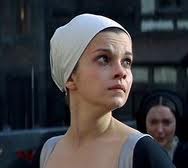
2007: Showtime’s “The Tudors”: Natalie Dormer Makes (Postmodern) History.  Jonathan Rhys-Meyers refused to wear a fat suit, the Showtime execs demanded that the series not be boring in a “you know…BBC way,” and Michael Hirst (creator and writer of the series) did all he could to inject the Reformation Crisis in between the sex scenes.  Only Natalie Dormer, barely known at the time, stood up for Anne, refusing to play her as a blonde and insisting that Hirst make her less slutty, smarter, and stronger in the second season.  For historians, the changes may have seemed slight.  But teenage and twenty-something viewers were enraptured.  “She was a modern day girl in the wrong time period,” they declared, constructing a new, “third-wave” feminist icon out of Dormer’s portrayal: ambitious, intelligent, flirtatious and perhaps most important to her fans, “hugely complicated and not easy to dismiss.”

2007-2013: Viral Anne. We can never get enough of Anne, it seems.  She is a woman for all seasons, a Rorschach figure who tells us more about ourselves than about her own life and death. In part, this is due to the unsolvable mystery of who she “really” was.  After her death, Henry did all he could to re-write her existence into absence: destroyed her portraits, her letters, removed her emblems.  Ironically, this has allowed Anne to live on, a queen recreated anew by each generation—and in the internet age, to spread her reign across a multitude of links.  With“The Tudors” came the websites…and the tee-shirts, mugs, and jewelry…and the facebook pages…and the blogs turned into self-published books. Quarrels erupt daily among amateur historians passionately attacking and defending themselves on Amazon.com. Elusive, contradictory, seductive.  Henry may have tried to erase her, but succeeded instead in allowing her to live a hundred lives, forever.

4 Comments

Filed under Anne Through the Ages

Sound the Trumpets! It’s the Annual Year in Review!

MythEyes

Searches from 2012 suggest that interest in Anne Boleyn remains strong.

One of the great features of WordPress is the the annual year in review function. What readers viewed this year will help to both determine the topics that Susan writes about on this blog and to ascertain what topics she presents in public. The Top 5 Posts for the blog this year were…

1. The Mystery of Anne Boleyn’s Looks

2. Fact, Fiction, and Philippa Gregory

3. Natalie and Anne

4. Myth Buster #2: How Eustace Chapuys Shaped the Story of the Decline of Henry and Anne’s Marriage

5. Jane, January, and Anne’s Downfall

The report also provided us with fun little facts, such as…

4,329 films were submitted to the 2012 Cannes Film Festival. This blog had 26,000 views in 2012. If each view were a film, this blog would power 6 Film Festivals

We could also tell you the five most popular search terms, but it is pretty standard stuff (Anne Boleyn, The Creation of Anne Boleyn, etc.). By far, we most enjoyed reading the odd search terms that brought people to the blog. Take for instance…

1. did anne boleyn have a secret child with the jailor in the tower (there’s a new one)

2.don’t play bridge with your wife (or what? What will happen? This led to someone coming to the site 4 times!)

3. graves of well-known chess masters and chess personalities (none here! Unless we’re talking political chess…)

4. ilana wants to write her research paper for her history class on the day that king henry viii married jane seymour. which problem exists with her topic? (ah, homework)

5. i love my god dionysus (and no, this wasn’t asked on New Year’s Eve)

Another search term was “it’s ok, she’ll laugh now.” We’re not quite certain what the searcher was looking for with that one, but it is amusing to think about how Anne would have viewed the attention that surrounds her today. Would she have laughed? It is an unanswerable question, but just by the internet chatter it seems that the fascination with Anne will continue well into 2013!

- Prepared by Natalie Sweet

Leave a Comment

Filed under The Year in Review

Anne Makes Her Debut in the Novel: “The Favor of Kings” to “Queen Anne Boleyn”

Taken from The Creation of Anne Boleyn, forthcoming April 2013. Purchase info available here.

“As she sat there alone in the room, her chin in her hand, her dark eyes heavy with anxieties, the thought that had slipped some time ago, shamefaced and sly, into the back of her mind edged more and more into the open . . . What her last card — her precious card—herself! . . . . . . ‘I dare not,’ she whispered to herself, and then in a strangled voice, ‘I dare!’ She grew aware at last that her clasped hands were clutching each other so tightly that the rings were cutting into the flesh. She drew off the ring from the sharpest cut. It was one of Henry’s earliest gifts to her, a plain gold band with, ‘Thy virtue is thy honor,’ graved within it . . . Her virtue — God alone knew how she had hugged that com­fort to her smarting pride against the secret sneers she divined about her. Yet now . . . [t]he ring slipped from her fingers and rolled out across the floor. A bit of rush blocked it and it toppled and dropped through an open knot hole. The augury seemed to her complete. She laughed — and then something, like a hand upon her throat, seemed to strangle the laughter at its source and she quivered back among the cushions, her hands hiding her face like some poor shamed thing. That year the Christmas revels were gayer than ever and King Henry was scarce an instant to be parted from his marchioness.”

The Favor of Kings by Mary Hastings Bradley

The Favor of Kings by Mary Hastings Bradley

This is as close as Mary Hastings Bradley, in The Favor of Kings (1912), the first full-length novel about Anne, comes to describing the moment when Anne decided to let Henry have — gasp — sex with her. It was a huge advance in sexual candor, however, over the Victori­ans, who had mangled Elizabeth’s stage of development at birth and/ or Anne and Henry’s marriage date in order to avoid acknowledging that Anne and Henry had bedded together before marriage. Bradley, an English major and graduate of Smith College who went on to lead quite an adventurous life, was committed to staying as true to “actual situations . . . real incident, and dialogue” as possible and did exten­sive research among the collected foreign and domestic letters and pa­pers of Henry’s reign; the then-prominent histories of Friedmann, the Stricklands, David Hume, and others; and at historical sites.  In her foreword, she acknowledges her use of these sources and also indicates where she has “taken liberties” with history (an admission that was quite common among novelists in the first half of the century and that has, unfortunately, gone completely out of fashion today). But she stresses that her aim is not to “enter an historical controversy” but “to suggest the truth of the colors of the picture I have tried to paint, and to offer the Anne Boleyn of this story, a very human girl.”

I want to pause for a moment over those two words: “human” and “girl.” Bradley doesn’t say exactly what she meant, but I speculate that “human” is to be counterposed to “Historical Figure” and “girl” is to be contrasted with “queen” as well as “woman.” Bradley wanted Anne to be someone whom readers could identify with, not observe from afar as a player in a grand historical pageant, “The Tudor Saga” or “The Reformation Crisis.” She wasn’t interested in either redeeming or vili­fying Anne. She wanted readers to understand her. And a large part of what would make this understanding possible is the imaginative con­juring of Anne’s feelings and thoughts before she had been subjected to and transformed by “the favor of kings” — a title Bradley means sar­donically — but was still a creature of fantasies and dreams, “gay and fearless and rashly proud, as the likeness of that Anne who dared and lost so long ago and whose blood was the first of any woman’s to stain an English scaffold.” And so, for the first time, an author ventures into the “inner life” of Anne, the young girl:

“Wolsey’s] cold arrogance that treated her mercilessly as a wooden pawn to be moved hither and yon quickened her to the fiercest re­sentment her fiery little heart had ever thrilled with . . . It was just such a night as [this] one that she had last met Percy, and under all the fierce surge of her anger came stealing the pain of the nevermore. Nevermore would they meet there — it might be they would never meet again. The poignancy of such denial was strange to her, but she divined that it was but the beginning of sorrow. Memories that had suddenly become an agony enwrapped her, and an aching presenti­ment of grief to come.”

In making Anne “human,” Bradley’s narrative introduces some ele­ments that are absent from previous ideas about Anne but that have since become stock features of later fictional portrayals. One is the manipulation of Anne by her father and uncle, whose ambitions for the family are behind their desire for the match between her and the king. With all that we now know about social history, the history of the family, and the position of women in the sixteenth century, it seems incredible that Anne would have been the all-powerful, autonomous prime mover that Chapuys and the histories that take his word for it make her out to be during the six years that the king pursued her. But ideology and hostility were much stronger forces than common sense in those accounts, and sociological thinking, completely unknown to the early polemicists and still a very young discipline even at the end of the nineteenth century, did not play much of a role in the first histories and biographies of Anne and Henry. Neither did the idea that Anne, as a young woman, might have been a less formidable personality than she would become as queen. Only the Stricklands and Benger seem to recognize that Anne, in fact, was once a young girl. Perhaps the fact that they, too, were once girls makes it harder for them to see Anne, as Froude, Friedmann, and Pollard do, as having sprung fully formed from the French court — a mature, ambitious agent of her own destiny.

But then, too, so little is actually known about Anne’s life as a girl that historians, although they indulge in creative license in their imag­inings of Anne the woman, may have felt that Anne’s early life was off-limits. Novelists, who freely admitted to filling in the blanks, felt no such limitations. Sometimes the early twentieth-century portraits were little more than anachronistic transplants of the Gibson girl into the sixteenth century, as in Reginald Drew’s 1912 Anne Boleyn.

“[Young Anne] was a vision of loveliness. She was radiant and dimpled, and her beautiful face, pink-hued and lily white, rippled with laugh­ter and bubbled with vivacity. She had sparkling eyes, wavy, golden-brown hair which framed her face like a picture, and which her coif could not either confine or conceal. She rode her palfrey perfectly, flicking her whip with her daintily gloved hand; her whole being per­sonified emotion, her carriage was that of a queen, and her musical laughter sounded like rippling water to the thirsting.”

Drew wasn’t the last to turn Anne into a creature of his own fantasies while ignoring the historical evidence (slim as that evidence is, we do know a few things, and among them is that she did not have “golden­brown hair”). It’s been a continuing tendency of Anne’s imaginers, whether they are painters, novelists, or casting directors, to project the beauty standards and feminine ideals of their own day onto Anne. The Victorians were fond of depicting Anne, in scenes with Henry, as a ma­ture, curvaceous (but, of course, corseted) fair-haired beauty, properly clinging to her husband; interestingly enough, she looks most like the “real” Anne — dark-haired and slender — in the paintings that mourn her fall. In the first decades of the twentieth century, Anne starts to look — and act — like the audacious “new girls” of the twenties and thirties, full of spunk and fun, “speeding joyously along on her bicycle [substitute “horse”] . . . women’s rights perched on the handlebars and cramping modes and manners strewn on her track.” She’s slender and clever, flirtatious and emotionally spontaneous; she doesn’t know when to hold her tongue.

Bradley’s Anne is of this model, which actually suits what we know of the historical Anne much better than the Victorian versions. It’s a very sympathetic picture, although not an idealizing one. Although Anne’s girlish high spirits, in the novel, are ultimately disfigured by ambition, it is the machinations of her father and uncle that are re­sponsible for her loss of innocence. Yet, the “seeds” of her destruction are also “in” her — not in her vanity or defiance of sexual morality, as the Stricklands have it, but in her proud, independent nature. In the passage that follows, Bradley presents the young Anne to us through the (retrospective) perspective of poet Thomas Wyatt, who never gives up his thwarted love for Anne and who represents the one who sees “the truth” in the novel.

“He looked at her now [after Anne becomes queen], jeweled and gauded till her slender body was like the glittering image of some idol . . . [B]ehind her chair in smiling converse, were her father and uncle, suave images of insincerity, assiduously grimacing upon her, and at the sight Wyatt’s heart filled with yet heavier dejection. Those elegants were like vultures feeding on her youth, he thought, in bitter clarity of vision . . . He had never thought before of Anne as over-young and helpless, but now . . . for all her heavy robes of state, her jewels, her air of command, he saw the girl in her as he had never seen it when she was yet younger; the flushed face that smiled so proudly under the drift of dark hair was a child’s face, its woman soul unawakened, its eyes smiling in a dream, unopened to the abyss ahead.”

The paradigm of Anne as a vivacious, high-spirited young girl whose life was profoundly — and tragically — altered by becoming Henry’s queen has remained the narrative spine of the twentieth cen­tury novels that are sympathetic to her. But sympathy is not the same as idealization, and the Anne of the early twentieth-century has very “human” faults. Some of those faults — such as pride and ambition — are not so different from the charges laid against her by Friedmann, Froude, and Pollard. But in the early novels, they no longer mark her as a “type”: a bad woman. This is due partly to the more flexible imagi­nation of the creative writer. And it’s due partly to changes in the ideol­ogy of femininity: Sexuality was no longer consistently seen as the line that divided good girls from bad girls, and female “ambition” was more likely to be viewed with uneasy ambivalence rather than pure horror. But Freudian and developmental psychology, as well as the perspec­tives of sociologists and anthropologists, had also created new frame­works for imagining the interaction of external environment and per­sonality; and the power of the change in Anne’s circumstances, once the king had singled her out — and then even more dramatically when she became queen — began to be seen as more significant to her story.

The Anne of most early twentieth-century fiction is not a bred-in-the ­bone she-devil. Rather, she is a strong-willed young woman with per­sonal qualities that are quite attractive but, when unleashed by her el­evation, proved dangerous to her. Even as a young girl, she was “auda­cious,” “confident,” and above all, “proud,” as Bradley, through Wyatt, describes her. “By the law of her nature,” she writes elsewhere in the novel, “she might command, coax, dominate, divert, bewitch, enthrall; but implore — never!” It’s Anne’s proud nature, in Bradley, that dis­tinguishes her from her pliant sister and that motivates her sexual re­sistance to the king. Her Anne does not withhold her favors out of manipulative ambition, as later narratives would have it, but because she was “too high of pride, too maiden of spirit, to surrender to such ignoble fate” — and because she was still in love with Percy. For the first third of the novel, Anne hopes that her persistent refusal would “weary Henry” and that “he would find some newer face, some fresher fancy.” The turning point comes only when she realizes that Henry means to make her queen. Anne is surprised and confused by this prospect rather than (as in other depictions) having schemed to bring it about: “The glade seemed to whirl about her. She felt the rushing of vast wings, the elation of airy heights. To be queen — to be Queen of England!” But the thrill is not only due to the sudden, unexpected fantasy of being queen. Anne’s pride, wounded by Wolsey’s ability to rearrange her fate — and in this novel, Katherine’s unwillingness to intercede — is also vindicated, and the “recklessness” of her nature is challenged.

“A fierce, cruel wave of joy swept over. To be queen on Katherine’s throne — Oh, what an ex­quisite, what an infinitely ironic retaliation! Dared she trust herself to the mad project? Dared she undertake the humbling of one queen, the crowning of another? Aye, she dared! Her blood rushed on in faster time: with feverish recklessness it sang songs of triumph and power in her veins. There was little that wild blood would not dare!”

This Anne is no maiden whose virtue was plundered by a rapa­cious monarch. But neither is she the temptress/witch incarnate. She’s a young woman whose temperament, for all her flirtatiousness, was more unnervingly “masculine” than was usual for her time: confident, excited by her own potential to effect action in the world, capable of fierce resentments, daring ambitions, bold action — and unwilling to be anyone’s plaything or political tool. As Francis Hackett sums it up: she was the mother of Elizabeth, not “an understudy of Queen Victo­ria.”60 And she has a sexual life, too, although her erotic temperament and tastes vary wildly from novel to novel, and — especially as histori­cal fiction became a thriving commercial specialty — could be quite extravagant. Elizabeth Louisa Moresby, writing under the pen name of E. Barrington (Anne Boleyn, 1932), while insisting that her story “is as true to history as the consultation of many authorities can make it,” ap­parently consulted some very odd authorities because her Anne, while sexually frigid with everyone else and thoroughly repulsed by Henry, is smitten with Dionysian Smeaton.

“She could fancy him dancing alone in the wild woodlands at Hever — yes, in that haunted spot where the oaks fell back and left an open space for moonlight. There, looking up at the searing moon with wild hair flying back from his forehead, he would caper like a goat and beckon, and the woodland creatures would crowd in a furry ring . . . He smelt of woods and fresh turned earth dewy in the night . . . A faun come to Court who had never changed his ways for Henry or another! All this he seemed to her, perhaps wholly mistakenly, for the man lived his life like others, so they told her. But she dangerously liked his love-making — wild, careless love with drifts of bird-music and no more responsibility than a cuckoo’s.”

Barrington, despite appearances, was not hinting that the charges of adultery with Smeaton might have been true; later in the novel, it’s very clear that her Anne is innocent of adultery. Barrington, a devotee of Buddhism who also wrote fantasy novels, seems to have been mo­tivated more by an aversion to the institution of marriage, which took the spontaneity, freedom, and “natural” flow out of relationships than she was in painting Anne as a sexual libertine. Elsewhere in the novel, she has Anne reflecting on “the weariness of married companionship with nothing new to say or do together” and “the tedium of a wife who loves calmly, securely.” Smeaton is used, I believe, as a symbol of the freedom Anne gives up when she marries Henry. “We are both crea­tures of fairy blood,” he tells Anne. “We know at bottom that neither Pope, Church, nor King matter a jot, but only the wild hearts of men that carry them into strange places. When you have flung his son into his arms come away with me and let him find another to nurse his leg . . . and bear his humour — some milk-blood bit of curd he cannot break, that will dissolve in whey if he looks at it! Come away, Anne, and we will wander the world singing for our bread and lying in mead­ows by a running river to eat it.”

In striking contrast to Barrington, Paul Rival’s 1936 novel, The Six Wives of Henry VIII, has Anne discovering her true womanhood in Henry’s arms. Originally written in French and quickly translated into English by Una Vincenzo, Lady Troubridge, Rival’s novel was reprinted in paperback form in 1970 with the front cover reading: now a ma-jor network tv series, taking its place beside the for­syte saga. The series was the BBC six-part The Six Wives of Henry VIII, with Keith Michell as Henry and Dorothy Tutin as Anne. But the novel bears little resemblance, in style or content, to that subdued, very proper British series. Rival’s language is dizzyingly intense and dramatic, and his interpretation of Anne and Henry’s attraction for each other seems a combination of early French existentialism (which Gabriel Marcel had introduced in the twenties) and Freudian theory (very much in vogue in the thirties). For Rival’s Henry, the thought of a child with Anne is more than a desire to secure the Tudor line, it is a way of making the “ethereal” creature into an earthly — Simone de Beauvoir would say “immanent” — body.

“Henry was invaded by a powerful and perverse fascination that dwelt in the thought that this small, dancing creature would be enslaved, would endure long months of a bewildered weakness until she be­came a mother. The more elusive [Anne] seemed, the more he burned to possess her. She stirred and re-awoke in him bygone mystical dreams, which took upon themselves new significance: “I shall take her in my arms and compel her to materialize, to become mere flesh of this earth. I shall fashion a woman out of this flame; I shall mingle my being with that of this sinuous snake, this Melusine. An essential particle of my body will inhabit her unreality, will slowly come to life, to birth and to the light of day, and the child will be myself and this small elusive Anne.”

Henry’s desire for Anne is thus premised on what Sartre would later describe as the desire to capture the elusive freedom of another person by “incarnating” it as flesh. But Anne, on her part, is a more Freudian kind of girl, who realizes her own sexuality only when she gives up ev­erything that is “masculine” about her — the “huntress,” with her own plans and ambitions — and submits totally to Henry, as she finally does at Calais.

“That night, in the conventional room which had been assigned to her in the castle of Calais, she opened her arms to Henry. She humbled herself and allowed him to possess her. The gentle wash of the waves was audible through the windows, the tapestries waved in the night breeze, and a dying log fire flowed upon the hearth.

They remained more than a week at Calais. Francis had gone and the chill air of November emphasized the silence. They had lived so long in a dream that reality surprised and alarmed them. Anne was at length a woman; Henry had delivered her from her own unbalanced fancies and revealed her to herself, finding her interior rhythm, giv­ing her serene happiness, the pleasure of ceasing to think, of allowing her mind and her nerves to be lulled to sleep, of being no more than a physical vessel, utterly fulfilled and submissive. For her there were now order, peace and repose. The sky was tranquil and colourless, the sea more grey than the sky with faint ripples and reflections and a few drifting sails. The nights unfolded themselves, long and blissful.”

In Francis Hackett’s Queen Anne Boleyn (1939), it’s Wyatt who holds the key to Anne’s libido, possibly because his bold, poetic nature makes for more ecstatic romance than the somewhat weak-kneed Percy of earlier novels.

“Anne shuddered as the force of her feeling for Thomas took impetus from the hours they had had together, hours borrowed from another plane of existence, borrowed from eternity. In those hours she had come into something of her own buried self — almost as if she had learned to walk or learned to talk. The proud woman in her, as well as the calculating, gave way to a creature of blinding tenderness, and this sweeping tenderness rolled through her, ran ramparts that advanced as they mounted, one surging on the other, until they broke with the dazzling submission of a wave. It was a succession of rapture she had not been prepared for. She was stunned by it, yet ached to return to him through it.”

Steamy sex aside, Hackett’s novel is extremely well researched, its portrait of Anne complex and subtle, and its skepticism about the received wisdom of the historians who recycled Chapuys (and each other) is refreshing and astute. The first Anne novel to become a New York Times best seller, Queen Anne Boleyn was also the first to benefit from the creation, in 1939, of the paperback book format, announced in the New York Times as “the most important literary coming-out party in the memory of New York’s oldest book lover. Today your 25 cent piece leaps to a par with dollar bills. Now for less than the few cents you spend each week for your morning newspaper, you can own one of the great books for which thousands of people have paid from $2 to $4.” When the paperback of Queen Anne Boleyn came out that same year, the first page quoted from its many excellent reviews from pres­tigious papers, but the back cover was clearly designed to sell copies to a broader audience than those who read the Christian Science Monitor, the New Statesman, or the Saturday Review. SHE CONQUERED THE HEART OF A KING — AND LOST HER LIFE FOR HER LOVE reads the bold headline, and below it ran the following text:

In all of history there are few stories as enthralling as the astonishing rise and tragic fall of Anne Boleyn. Born the daughter of a commoner, her proud beauty won the heart of mighty Henry the Eighth — but to sanctify their love, they face a battle that shook the foundations of the Western World. Against the might of the Church, the opposition of the nobility, and the rage of an Emperor, she rose to become Queen of England — and to die on the block at the hands of the man she loved.

Anne was now a full-fledged heroine of the historical romance, and a major commercial item.


1 Comment

Filed under Anne Through the Ages, Book Excerpts

Unresolved Mysteries: Winner of our “What REALLY Went Wrong?” Contest

Katherine on her first trip to England!

*

*

WINNER: “What REALLY Went Wrong Contest”

Katherine Stinson

Unsolved Mysteries: SPECIAL EDITION

The Dissolution of Anne Boleyn and Henry VIII’s Marriage.  

*

*

INTERVIEWER

Welcome back! In this special edition of Unsolved Mysteries, we’ll be talking EXCLUSIVELY to Anne Boleyn and Henry VIII to find out what REALLY caused their marriage to fall apart!

HENRY VIII

I was never married to She-Who-Must-Not-Be-Named.

ANNE BOLEYN

Oooh, someone’s read Harry Potter!

HENRY VIII

I was FORCED to find something else to read after finishing my beloved collection of Philippa Gregory novels.

ANNE BOLEYN

Where is that lovely collection? I could really use some kindling for my fireplace!

INTERVIEWER

Do I need to get you two a referee?

HENRY VIII

Course not.

INTERVIEWER

Okay then, Henry, my first question’s for you.

HENRY VIII

Course it is.

ANNE BOLEYN

Can I ask Henry a question first?

INTERVIEWER

Hm. I suppose. As long as it doesn’t involve the words, “Fat,” “Slimy,” or, “Git.”

ANNE BOLEYN

Damn.

HENRY VIII

Why so bitter? You’re the one who made ME a cuckold! Plotted my death! Said my poetry was awful!

ANNE BOLEYN

Can’t deny that I’m guilty of that last charge!

INTERVIEWER

So Anne, would you have ever done anything differently?

ANNE BOLEYN

Not at all. I don’t regret a thing.

HENRY VIII

Really?

ANNE BOLEYN

Well the whole getting beheaded thing hurt a bit, but beggars can’t be choosers.

HENRY VIII

AT LEAST I LET YOU HAVE A SWORD!

INTERVIEWER

Henry, why did you arrange for a special executioner for Anne? Why not just use one of your axe-men?

ANNE BOLEYN

Because he felt guilty.

HENRY VIII

I DID NOT. It was less expensive, and more efficient!

THOMAS CROMWELL

No it wasn’t.

HENRY VIII

SHUT UP CROMWELL!

THOMAS CROMWELL

Shall I pull out the receipts?

HENRY VIII

You still have the receipts?

THOMAS CROMWELL

Just the important ones.

INTERVIEWER

Since you’re here Cromwell, do you mind me asking….

THOMAS CROMWELL

You are the interviewer.

INTERVIEWER

Were you really the main instigator of Anne’s arrest?

THOMAS CROMWELL

I am the King’s good servant.

ANNE BOLEYN

Didn’t another Thomas say that once?

THOMAS CROMWELL

More won’t mind. He wouldn’t want to violate the sanctity of his sainthood with unnecessary anger towards a fellow Thomas.

HENRY VIII

You certainly didn’t handle my affairs with with the other Anne very well!

ANNE BOLEYN

EHarmony would never hire you!

THOMAS CROMWELL

I stand by my matchmaking abilities.

INTERVIEWER

Henry, would you have stayed with Anne had she bore you a son?

HENRY VIII

Of course not. I had no intention of booking a one way ticket to hell.

ANNE BOLEYN

The flames of hell would never have been hot enough to melt the coldness of your heart towards me.

HENRY VIII

Poetic words will get you nowhere Anne.

ANNE BOLEYN

Was that my name I heard coming from your lips?

HENRY VIII

SHE-WHO-MUST-NOT-BE-NAMED! THAT’S WHAT I SAID!

INTERVIEWER

Sureeeee you did. And I’m the Queen of England!

ANNE BOLEYN

Given Henry’s marital record, I wouldn’t be surprised if you actually were!

THOMAS CROMWELL

There’s that Boleyn sass we all know and love!

HENRY VIII

Harrumph. You’ll be getting no love from me.

INTERVIEWER

And I suppose I won’t be getting any answers from ANY OF YOU?

ANNE BOLEYN

Sorry dear. We’re still trying to figure everything out ourselves.

INTERVIEWER

Well, at least answer me this. Anne, did you truly love Henry? And Henry, did you ever truly love Anne?

ANNE BOLEYN

Yes. Yes, I did.

HENRY VIII

I have the right to remain silent!

THOMAS CROMWELL

Aw. Does anybody love me?

INTERVIEWER

Sorry Cromwell, you’re another interview entirely!

(ASIDE) I suppose the mystery of Anne and Henry has yet to be unraveled. At least historical fiction novelists can rest easy, knowing that one of history’s most volatile couple’s can’t even figure out the answer themselves.

HENRY VIII

WHY COULDN’T EHARMONY HAVE BEEN INVENTED SOONER?

2 Comments

Filed under Contest Winners

Sources for The Creation of Anne Boleyn

A quick note: British History Online was used to access a number of primary sources, such as The Letters and Papers, Foreign and Domestic, Henry VIII; The Calendar of State Papers, Spain; Calendar of State Papers Relating to English Affairs in the Archives of Venice; and etc.

Adam’s Rib. Directed by George Cukor. Performed by Spencer Tracy, Katharine Hepburn, Judy Holliday. 1949.

The Adventures of Robin Hood. Directed by Michael Curtiz. Performed by Olivia de Haviland, Basil Rathbone Errol Flynn. 1938.

Alexander, Barb. Interview by author, email, Lexington, Ky., 24 October 2011.

Alexander, Victoria. “Film Reviews: The Other Boleyn Girl.” Films in Review. February 29, 2008. http://www.filmsinreview.com/2008/02/29/the-other-boleyn-girl/ (accessed March 25, 2012).

Alice Doesn’t Live Here Anymore. Directed by Martin Scorsese. Performed by Kris Kristofferson, Mia Bendixsen Ellen Burstyn. 1974.

“Alison Weir, Arguing The Case For Anne Boleyn.” npr books. January 24, 2010. http://www.npr.org/templates/story/story.php?storyId=122872854 (accessed March 25, 2012).

Allen, Vanessa. “Women turn history into a bizarre soap opera, says Starkey.” Mail Online. March 31, 2009. http://www.dailymail.co.uk/news/article-1166125/Women-turn-history-bizarre-soap-opera-says-Starkey.html (accessed March 15, 2012).

Ally McBeal. Directed by Mel Damski, et al. Performed by Calista Flockhart, Greg Germann, and Jane Krakowski. 1997-2002.

America’s Next Top Model. Directed by Tony Croll, et al. Performed by Tyra Banks, Jay Manuel, Nigel Barker. 2003-2012.

Anderson, Maxwell. Anne of the Thousand Days. New York: Dramatists Play Service, INC., 1977.

Anna Boleyn. Directed by Ernst Lubitsch. Performed by Henny Porten, Emil Jannings, Paul Hartmann. 1920.

Anne of the Thousand Days. Directed by Charles Jarrott. Performed by Genevieve Bujold and Richard Burton. 1969.

Anonymous. Directed by Roland Emmerich. Performed by Rhys Ifans, Vanessa Redgrave, and David Thewlis. 2011.

Argov, Sherry. Why Men Love Bitches: From Doormat to Dreamgirl – A Woman’s Guide to Holding Her Own in a Relationship. 6th. Avon: Adams Media, 2002.

Atkinson, Brooks. “Anne and Henry: Maxwell Anderson Chronicles a Stormy Love Affair in a Historical Play.” The New York Times, December 19, 1948.

Armstrong, Jessie. My Friend Anne: A Story of the Sixteenth Century. London: F. Warne, 1935.

Aulnoy, Madame d’. The Novels of Elizabeth, Queen of England: Containing the History of Queen Ann of Bullen. London: Printed for Mark Pardoe, 1680-1681.

Austen, Jane. The History of England: By a partial, prejudiced, & ignorant Hitorian (Note: There will be very few Dates in this History). Chapel Hill: Algonquin Books of Chapel Hill, 1993.

The Bachelor. Directed by et al Ken Fuchs. Performed by Brad Womack, and Ali Fedotowsky Chris Harrison. 2002-2012.

Bailey, Alyssa. “I might have a third nipple.” Girl’s Life. December 7, 2010. http://www.girlslife.com/post/2010/12/07/I-might-have-a-third-nipple.aspx?cp=all (accessed February 20, 2012).

Baker, Karissa. Interview by author and Natalie Sweet, email, Lexington, Ky., April 2011.

Banks, John. Vertue Betray’d: or Anna Bullen. Los Angeles: The Augustan Reprint Society, 1981.

Barefoot in the Park. Directed by Gene Saks. Performed by Robert Redford, Jane Fonda, Charles Boyer. 1967.

Barnes, Margaret Campbell. Brief Gaudy Hour: A Novel of Anne Boleyn. Naperville: Sourcebooks, Inc., 2008.

Barrington, E. Anne Boleyn. Garden City: Doubleday, Doran & Company, Inc., 1934.

Becket. Directed by Peter Glenville. Performed by Richard Burton, Peter O’Toole, John Gielgud. 1964.

Bellafante, Gina. “Nasty, but Not So Brutish and Short.” The New York Times. March 28, 2008. http://tv.nytimes.com/2008/03/28/arts/television/28tudo.html?_r=1 (accessed January 15, 2012).

Benger, Elizabeth. Memoirs of the Life of Anne Boleyn, Queen of Henry VIII. London: A. & R. Spottiswoode, 1821.

Bennet, Eve Tavor. “”Secret History”: Or, Talebearing Inside and Outside the Secretorie.” Huntington Library Quarterly 68, no. 1-2 (March 2005): 375-396.

Bennett, Vanora. “Dreamer or schemer? Step forward the real Anne Boleyn.” Mail Online. March 3, 2012. http://www.dailymail.co.uk/home/you/article-2108838/Dreamer-schemer-Step-forward-real-Anne-Boleyn.html (accessed March 25, 2012).

Bermingham, Ciaran. “Anne Boleyn.” Morning Star. July 27, 2011. http://www.morningstaronline.co.uk/news/content/view/full/107553 (accessed March 25, 2012).

Bernard, G.W. Anne Boleyn: Fatal Attractions. New Haven: Yale University Press, 2010.

—.”Anne Boleyn’s Religion.” The Historical Journal 36, no. 1 (March 1993): 1-20.

—.”The Fall of Anne Boleyn.” The English Historical Review 106, no. 420 (July 1991): 584-610.

—.”The Fall of Anne Boleyn: A Rejoinder.” The English Historical Review 107, no. 424 (1992): 665-674.

—.The King’s Reformation: Henry VIII and the Remaking of the English Church. New Haven: Yale University Press, 2007.

Beverly Hills, 90210. Directed by Daniel Attias, et al. Performed by Jason Priestley, Shannen Doherty, and Luke Perry. 1990-2000.

Billington, Michael. “Anne Boleyn.” The Guardian. July 29, 2010. http://www.guardian.co.uk/stage/2010/jul/29/anne-boleyn-review (accessed March 25, 2012).

Blessington, Marguerite. The Book of Beauty, or, Regal Gallery. London: D. Bogue, 1848.

Bloom, Allan. Closing of the American Mind: How Higher Education has Failed Democracy and Impoverished the Souls of Today’s Students. New York: Simon & Schuster Inc., 1987.

Boker, George H. Anne Boleyn, A Tragedy. Philadelphia: A. Hart, 1850.

Bonnie and Clyde. Directed by Arthur Penn. Performed by Warren Beatty, Faye Dunaway, and Michael J. Pollard. 1967.

Booth, Sue. Interview by author, email, Lexington, Ky., 24 October 2011.

Bordo, Susan. The Flight to Objectivity: Essays on Cartesianism and Culture. Albany: State University of New York Press, 1987.

—.and Natalie Sweet. The Creation of Anne Boleyn. Facebook. 2011-2012.

Borman, Tracy. Elizabeth’s Women: Friends, Rivals, and Foes Who Shaped the Virgin Queen. New York: Bantam Books, 2009.

Bradley, Mary Hastings. The Favor of Kings. New York and London: D. Appleton and Company, 1912.

Brand, Madeleine. “‘The Tudors’ Battles with the Truth.” Day to Day (NPR), March 28, 2008.

Brenton, Howard. Anne Boleyn. London: Nick Hern Books, 2010.

—.Interview by author, London, England, July 30, 2010.

Brideshead Revisited. Directed by Michael Lindsay-Hogg Charles Sturridge. Performed by Jeremy Irons, Diana Quick, and Roger Milner. 1981.

British History Online. n.d. http://www.british-history.ac.uk/ (accessed February 13, 2012).

Brown, Tina. The Diana Chronicles . New York: Broadway Books, 2007.

Bryson, Sarah. Interview by author, email, Lexington, Ky., October 2011.

Bujold, Genevieve. Interview by author, telephone, Lexington, Ky., 21 June 2010.

Burstein, Miriam Elizabeth. “The Fictional Afterlife of Anne Boleyn: How to Do Things with the Queen, 1901-2006.” CLIO 37 (2007).

—.The Reduced Pretensions of the Historic Muse”: Agnes Strickland and the Commerce of Women’s History.” The Journal of Narrative Technique 28, no. 3 (Fall 1998): 219-242.

Butch Cassidy and the Sundance Kid. Directed by George Roy Hill. Performed by Paul Newman, Robert Redford, and Katharine Ross. 1969.

Byrne, M. St. Clare. Editor. The Letters of King Henry VIII: A Selection, with a few other             Documents. New York: Funk & Wagnalls, 1968.

BBC Two. “Production Notes.” The Other Boleyn Girl.

Broadbent, Giles. “Review: Anne Boleyn, Shakespeare’s Globe.” The Wharf. August 4, 2010. http://www.wharf.co.uk/2010/08/review-anne-boleyn-shakespeare.html      (accessed March 15, 2012).

Burr, Ty. “‘Boleyn Girl’ is a royal pity.” boston.com. February 29, 2008. http://articles.boston.com/2008-02-29/ae/29274755_1_boleyn-sisters-boleyn-girl-justin-chadwick (accessed March 25, 2012).

Bush, Annie Forbes. Memoirs of the Queens of France. Philadelphia: A. Hart, late Carey & Hart, 1851.

Anne of the Thousand Days. Directed by Charles Jarrott. Performed by Richard Burton, Geneviève Bujold and Irene Papas. 1969.

Callcott, Lady. Little Arthur’s History of England. London: John Murray, 1856.

Camelot. Directed by Joshua Logan. Performed by Richard Harris, Vanessa Redgrave, and Franco Nero. 1967.

Canby, Vincent. “Anne of the Thousand Days (1969).” The New York Times. January 21, 1970. http://movies.nytimes.com/movie/review?res=9907EFDA1F39EF34BC4951DFB766838B669EDE (accessed February 17, 2012).

Capellanus, Andreas. The Art of Courtly Love. Translated by John Jay Parry. New York: Columbia University Press, 1960.

Carbone, Gina. “‘Other Boleyn Girl’: It’s a bust.” Seacoast Online. March 1, 2008. http://www.seacoastonline.com/apps/pbcs.dll/article?AID=/20080301/ENTERTAIN04/80301008&nocache=1 (accessed March 30, 2012).

Carley, James P. The Books of King Henry VIII and his Wives. London: The British Library, 2004.

Casablanca. Directed by Michael Curtiz. Performed by Humphrey Bogart, Ingrid Bergman, and Paul Henreid. 1942.

Case, Makenzie. Interview by author and Natalie Sweet, email, Lexington, Ky., April 2011.

Castiglione, Baldessarre. The Book of the Courtier. Translated by Leonard Eckstein Opdycke. New York: Charles Scribner’s Sons, 1903.

Castiglione, Count Baldesar. The Book of the Courtier. Translated by Leonard Eckstein Opdycke. New York: Charles Scribner’s Sons, 1901.

Cavendish, George. The Life and Death of Cardinal Wolsey. Boston and New York: Houghton Mifflin and Company, 1905.

Cholakian, Patricia F., and Rouben C. Cholakian. Marguerite de Navarre: Mother of the Renaissance. New York: Columbia University Press, 2006.

“Cinema: The Lion in Autumn.” Time. February 2, 1970. http://www.time.com/time/magazine/article/0,9171,878191,00.html (accessed March 15, 2012).

Clapp, Susannah. “Anne Boleyn; Danton’s Death; The Prince of Homburg.” The Guardian. July 31, 2010. http://www.guardian.co.uk/stage/2010/aug/01/anne-boleyn-danton-death-prince-homberg (accessed March 25, 2012).

Clement, Cate. Interview by author, email, Lexington, Ky., 2011.

Cohen, Alex. “‘The Tudors’ Battles with the Truth.” NPR. March 28, 2008. http://www.npr.org/templates/story/story.php?storyId=89182466 (accessed February 15, 2012).

Compton, Sara. Interview by author and Natalie Sweet, email, Lexington, Ky., April 2011.

Connor, Steven. The Book of Skin. Ithaca: Cornell University Press, 2004.

“Corpus Christi (Toledo, Toledo).” Castilla-La Mancha. n.d. http://www.visitclm.com/arte-cultura/fiestas/toledo/corpus-christi/ (accessed April 9, 2009).

Cox, Ted. “History goes down easy on Showtime: ‘The Tudors’ sees Henry VIII as a royal Tony Soprano.” The Daily Herald, March 29, 2007: Page 1, Section 4.

Cox, Tom. “These Tudors are all sex and soundbites.” The Mail on Sunday, April 24, 2011.

Cressy, David. Birth, Marriage & Death: Ritual, Religion, and the Life-Cycle in Tudor and Stuart England. Oxford: Oxford University Press, 2002.

Crowley, Jessica. Interview by author and Natalie Sweet, email, Lexington, Ky., April 2011.

Dallas. Directed by et al Leonard Katzman. Performed by Ken Kercheval, and Patrick Duffy Larry Hagman. 1978-1991.

Daneau, Lambert. A Dialogue of Witches in foretime commonly called Sorcerers. English Translation. Rev. EP, 1575.

Danger UXB. Directed by et al Ferdinand Fairfax. Performed by Maurice Roëves, and George Innes Anthony Andrews. 1979.

Dargis, Manohla. “Rival Sisters Duke It Out for the Passion of a King.” The New York Times. February 29, 2008. http://movies.nytimes.com/2008/02/29/movies/29bole.html (accessed March 25, 2012).

Das, Lina. “How horrible can Henry get? It’s the last ever series of historical romp The Tudors, and the King’s at his ghastly worst.” Mail Online. January 28, 2011. http://www.dailymail.co.uk/femail/article-1351379/How-horrible-Henry-Its-series-historical-romp-The-Tudors-Kings-ghastly-worst.html (accessed January 15, 2012).

—. “Lie back and think of Olde England! Is this TV’s sexiest historical romp?” Mail Online. September 7, 2007. http://www.dailymail.co.uk/tvshowbiz/reviews/article-480475/Lie-think-Olde-England-Is-TVs-sexiest-historical-romp.html (accessed January 15, 2012).

d’Aubigné, Jean Henri Merle. History of the Reformation in Europe in the Time of Calvin. Vol. V. London: Longmans, Green, and Co., 1869.

d’Aulnoy, Marie-Catherine. The novels of Elizabeth, Queen of England containing the history of Queen Ann of Bullen. London: Mark Pardoe, 1680.

Dawson’s Creek. Directed by et al Gregory Prange. Performed by James Van Der Beek, Katie Holmes, and Michelle Williams. 1998-2003.

de Carles, Lancelot. “Poèm Sur La Mort D’Anne Boleyn, par Lancelot de Carles.” In La Grande-Bretagne Devant L’opinion Française au XVIIe siècl, by Georges Ascoli. Paris: J. Gamber, 1927.

de Navarre, Marguerite. Selected Writings: A Bilingual Edition. Chicago: University of Chicago Press, 2008.

Deggans, Eric. “Meet Henry VIII, rock star.” Tampa Bay Times. March 31, 2007. http://www.sptimes.com/2007/03/31/news_pf/Floridian/Meet_Henry_VIII__rock.shtml (accessed February 15, 2012).

Denby, David. Snark: It’s Mean, It’s Personal, and It’s Ruining Our Conversation. New York: Simon & Schuster, 2009.

Denny, Joanna. Anne Boleyn: A New Life of England’s Tragic Queen. Philadelphia: Da Capo Press, 2007.

Desperate Housewives. Directed by David Grossman, et al. Performed by Teri Hatcher, Felicity Huffman, and Marcia Cross. 2004-2012.

Dexter. Directed by John Dahl, et al. Performed by Michael C. Hall, Jennifer Carpenter, and Lauren Vélez. 2006-2012.

Dickens, Charles. A Child’s History of England: England from the Reign of Henry the Seventh to the Revolution of 1688. London: Bradbury and Evans, 1854.

Dixon, William H. History of Two Queens: I. Catherine of Aragon. II. Anne Boleyn. Leipzig: Bernhard, 1874.

Donizetti, Gaetano. Anne Boleyn; Opera in 2 Acts and 6 Scenes. Translated by Chester Kallman. New York: G. Ricordi, 1959.

Dormer, Natalie. Interview by author, Richmond Upon Thames, England, 31 July 2010.

Dostoevsky, Fyodor. The Idiot. MobileReference, 2008.

Douglas, Susan J. “Where Have You Gone, Roseanne Barr?” The Shriver Report. October 2009. http://www.shriverreport.com/awn/media.php (accessed March 25, 2012).

Dowell, Ben. “Anne Boleyn.” The Stage Reviews. July 29, 2010. http://www.thestage.co.uk/reviews/review.php/29073/anne-boleyn (accessed March 25, 2012).

Drew, Reginald. Anne Boleyn. Boston: Sherman, French & Company, 1912.

Driscoll, Rob. “The Movies: Sister Act.” Western Mail, March 7, 2008: 14.

Dugdale, John. “What The Tudors has taught us.” The Guardian. April 1, 2011. http://www.guardian.co.uk/tv-and-radio/tvandradioblog/2011/apr/01/the-tudors-history-revelations (accessed March 26, 2012).

Dunlop, Scott. Creator. The Real Housewives of Atlanta. Seasons 1-3, 2008-2010.

—.The Real Housewives of Orange County. Season 1, 2006.

Dynasty. Directed by Irving J. Moore, et al. Performed by Linda Evans, Joan Collins, and John Forsythe. 1981-1989.

Eades, Mark. “Producer gets real about the real housewives.” The Orange County Register. January 10, 2007. http://www.ocregister.com/news/people-180668-think-coto.html (accessed March 15, 2012).

Eakins, Lara. Interview by author, email, Lexington, Ky., 25 November 2011.

Easy Rider. Directed by Dennis Hopper. Performed by Peter Fonda, Dennis Hopper, Jack Nicholson. 1969.

Elizabeth. Directed by Shekhar Kapur. Performed by Cate Blanchett, Geoffrey Rush, and Christopher Eccleston. 1998.

Elizabeth R. Directed by Roderick Graham. Performed by Glenda Jackson, Ronald Hines, and Stephen Murray. 1971.

Ellis, Henry. Original Letters, Illustrative of English History; Including Numerous Royal Letters: From Autographs in teh British Museum, and One or Two Other Collections. With Notes and Illustrations. Vol. II. London: Harding, Triphook, and Lepard, 1824.

Elton, Geoffrey Rudolph. England Under the Tudors. London: Methuen, 1977.

Elyot, Thomas. The Defence of Good Women. London: In aedibus T. Bertheleti, 1545.

Emerson, Jim. “Chicago Sun Times.” The Other Boleyn Girl: Catfight in the House of Tudor. February 29, 2008. http://rogerebert.suntimes.com/apps/pbcs.dll/article?AID=/20080228/REVIEWS/52204881&template=printart (accessed March 15, 2012).

Erasmus, Desiderius. “The Praise of Folly.” In Readings in Western Religious Thoughs: II The Middle Ages Through the Reformation, by Patrick V. Reid, 283-297. Mahwah: Paulist Press, 1995.

–.The Education of a Christian Prince with the panegyric for Archduke Philip of Austria. Cambridge: Cambridge University Press, 2003.

Erickson, Carolly. The Favored Queen. New York: St. Martin’s Press, 2011.

—. Great Harry. New York: St. Martin’s Griffin, 1980.

Farmer, Lydia Hoyt. The Girls’ Book of Famous Queens. New York: Thomas Y. Crowell & Co., 1887.

Fatal Attraction. Directed by Adrian Lyne. Performed by Michael Douglas, Glenn Close, and Anne Archer. 1987.

Father of the Bride. Directed by Vincente Minnelli. Performed by Spencer Tracy, Joan Bennett, Elizabeth Taylor. 1950.

Fielding, Helen. Bridget Jones’s Diary. New York: Penguin Books, 1996.

Fienberg, Daniel. “Review: ‘The Tudors’ on Showtime.” Zap 2 it. March 30, 2007. http://blog.zap2it.com/frominsidethebox/2007/03/review-the-tudors-on-showtime.html (accessed January 15, 2012).

Fish, Simon. A Supplication for the Beggars. Edited by Edward Arber. London, 1529.

Flynn, Gaynor. “Natalie Portman The Other Boleyn Girl Interview.” girl.com.au. n.d. http://www.girl.com.au/natalie-portman-the-other-boleyn-girl-interview.htm (accessed March 1, 2012).

Forester, Frank. Frank Forester’s Fish and Fishing in the United States and British Provinces of North America. New York: Arno, 1970.

The Forsyte Saga . Directed by James Cellan Jones, David Giles. Performed by Margaret Tyzack, Nyree Dawn Porter, and Eric Porter. 1967.

Foxe, John. The Acts and Monuments of John Foxe. The Church Historians of England. Vol. V. London: Beeleys, 1857.

France, Anne of. Anne of France: Lessons for my Daughter. Edited by Sharon L. Jansen. Cambridge: D.S. Brewer, 2004.

Fraser, Antonia. The Six Wives of Henry VIII. London: Mandarin, 1993.

Freeman, Thomas S. “Research, Rumour and Propaganda: Anne Boleyn in Foxe’s ‘Book of Martyrs’.” The Historical Journal 38, no. 4 (1995): 797-819.

Friedmann, Paul. Anne Boleyn: A Chapter of English History 1527-1536. Vol. II. London: MacMillan and Co., 1884.

—. Anne Boleyn: A Chapter of English History 1527-1536. Vol. II. London: MacMillan and Co., 1884.

Frost/Nixon. Directed by Ron Howard. Performed by Frank Langella, Michael Sheen, and Kevin Bacon. 2008.

Froude, James A. The Divorce of Catherine of Aragon: The Story as Told by the Imperial Ambassadors Resident at the Court of Henry VIII. London: Longmans, Green and Co., 1891.

—. The Divorce of Catherine of Aragon: The Story as Told by the Imperial Ambassadors Resident at the Court of Henry VIII. London: Longmans, Green, and Co., 1891.

Fulkerson, Perry. “Henry VIII: Who Needs Wives?” The Evening Independent, November 5, 1973: 10-B.

Gairdner, James. The Reign of Henry VIII from His Accession to the Death of Wolsey, Volume II. London: John Murray, 1884.

Gardiner, S.R. English History for Schools B.C. 55- A.D. 1880. New York: Henry Holt And Company, 1881.

Gardner, Laurien. A Lady Raised High: A Novel of Anne Boleyn. New York: Berkley Publishing Group, 2006.

Gavin, Nell. Threads: The Reincarnation of Anne Boleyn. Book and Quill Press, 2001.

George, Margaret. The Autobiography of Henry VIII: With Notes by His Fool, Will Somers. New York: St. Martin’s Press, 1986.

–. Interview by author, email, Lexington, Ky., 15 August 2011.

Gilbert, Gerard. “Golden girl: How Natalie Dormer became the new queen of the screen.” The Independent. September 17, 2011. http://www.independent.co.uk/news/people/profiles/golden-girl-how-natalie-dormer-became-the-new-queen-of-the-screen-2354626.html (accessed January 15, 2012).

Goldsmith, Oliver. The History of England, From the Earliest Times to the Death of George II. Vol. II. London: T. Davies, 1771.

Gomez, Cris. Interview by author and Natalie Sweet, email, Lexington, Ky., April 2011.

Goodman, Irene. “Why Anne Boleyn is the Poster Girl of Historical Fiction.” The Historical Novel Society. November 2005. http://www.historicalnovelsociety.org/solander/anne_boleyn.htm (accessed February 1, 2012).

The Graduate. Directed by Mike Nichols. Performed by Dustin Hoffman, Anne Bancroft, and Katharine Ross. 1967.

Greco, Albert N. The Book Publishing Industry. Mahwah: Lawrence Erlbaum Associates, Inc., 2004.

Gregory, Philippa. “Book World Live: Historical Novelist Philippa Gregory.” The Washington Post. October 9, 2008. http://www.washingtonpost.com/wp-dyn/content/discussion/2008/10/02/DI2008100202254.html (accessed April 13, 2012).

Gregory, Philippa. “Historic Passion Born a Writer: Forged as a Historian.” History Workshop Journal, no. 59 (2005): 237-242.

—. “KING SIZE! As Jonathan Rhys Meyers Returns to Our Screens in the Tudors, Research   Shows That the Real Henry VIII Had a 52in Waist and Paid a High Price for Being a        Rotund Royal.” The Daily Mail. April 10, 2009, p. 13.

—. The Other Boleyn Girl. New York: Pocket Star Books, 2007.

—. The Other Boleyn Girl. New York: Touchstone, 2003.

—. “The Other Boleyn Girl: History in the making.” The Telegraph. February 23, 2008. http://www.telegraph.co.uk/culture/film/3671391/The-Other-Boleyn-Girl-History-in-the-making.html (accessed March 25, 2008).

—.Philippa Gregory Official Website. http://www.philippagregory.com/ (Accessed 2011)

—. “What happened when the retiring author of The Other Boleyn Girl collided with greddy Hollywood?” Mail Online. February 23, 2008. http://www.dailymail.co.uk/femail/article-517758/What-happened-retiring-author-The-Other-Boleyn-Girl-collided-greedy-Hollywood.html (accessed March 25, 2012).

Grueninger, Natalie. On the Tudor Trail. http://onthetudortrail.com/Blog/ (accessed March                    15, 2012).

La Guerre est Finie. Directed by Alain Resnais. Performed by Yves Montand, Ingrid Thulin, and Geneviève Bujold. 1966.

Guy, John. “Why The Tudors is hilarious historical bunk.” The Telegraph. August 1, 2008. http://www.telegraph.co.uk/culture/tvandradio/3557583/Why-The-Tudors-is-hilarious-historical-bunk.html (accessed January 15, 2012).

Hackett, Francis. Anne Boleyn. New York: Popular Library, 1939.

—. Henry the Eighth: The Personal History of A Dynasty and His Six Wives. New York: Liveright Publishing Corporation, 1945.

Hall, Brittani. Interview by author and Natalie Sweet, email, Lexington, Ky., April 2011.

The Hand that Rocks the Cradle. Directed by Curtis Hanson. Performed by Annabella Sciorra, Rebecca De Mornay, and Matt McCoy. 1992.

Harmetz, Aljean. “How to Win an Oscar Nomination, From ‘Anne’ to ‘Z’.” The New York Times, April 5, 1970.

Hanks, Robert. “Peter Morgan: Drama King.” The Independent, February 24, 2007.

Hart, Kelly. The Mistresses of Henry VIII. Charleston: The History Press, 2011.

Henry VIII . Directed by Pete Travis. Performed by Ray Winstone, Joss Ackland, and Sid Mitchell. 2003.

“Henry VIII reveals his softer side in never-before-seen gushing love letter to Anne Boleyn.” Mail Online. February 14, 2009. http://www.dailymail.co.uk/news/article-1145429/Henry-VIII-reveals-softer-seen-gushing-love-letter-Anne-Boleyn.html (accessed February 15, 2012).

Herbert, Henry W. Memoirs of Henry VIII of England: With the Fotunes, Fates, and Characters of His Six Wives. New York and Auburn: Miller, Orton & Mulligan, 1856.

Herbst, Susan. Rude Democracy: Civility and Incivility in American Politics. Philadelphia: Temple University Press, 2010.

Hester, Nathalie. “Travel and the Art of Telling the Truth: Marie-Catherine d’Aulnoy’s Travels to Spain.” Huntington Library Quarterly 70, no. 1 (March 2007): 87-102.

Highley, Christopher. “”A Pestilent and Seditious Book”: Nicholas Sander’s Schismatis Anglicani and Catholic Histories.” In The Uses of History in Early Modern England, edited by Paulina Kewes. San Marino: Henry E. Huntington Library and Art Gallery, 2006.

Hirst, Michael. Interview by author, telephone, Lexington, Ky., 28 April 2011.

–.The Tudors: It’s Good to Be King – Final shooting scripts 1-5 for The Tudors from Showtime Network, Inc. New York: Simon Spotlight Entertainment, 2007.

Hohenadel, Kristin. “The King Goes A-courting.” Sun Sentinel. April 1, 2007. http://articles.sun-sentinel.com/2007-04-01/news/0703280572_1_tudors-rhys-meyers-henry-s-father/2 (accessed January 15, 2012).

—. “He’s Henry the Eighth, he is.” The Sunday Times, April 8, 2007.

Holleran, Scott. “Close-Up: Actress Genevieve Bujold.” Box Office Mojo. April 13, 2007. http://boxofficemojo.com/features/?id=2290&p=.htm (accessed February 17, 2012).

Hough, Andrew. “BBC period show, The Tudors, is ‘historically inaccurate’, leading historian says.” The Telegraph. August 10, 2009. http://www.telegraph.co.uk/culture/tvandradio/6005582/BBC-period-show-The-Tudors-is-historically-inaccurate-leading-historian-says.html (accessed January 15, 2012).

House M.D. Directed by Greg Yaitanes, et al. Performed by Hugh Laurie, Omar Epps, and Robert Sean Leonard. 2004-2012.

Hull, Liz, and Dalya Alberge. “Anne Boleyn DID have an affair with her brother: The poem that ‘proves’ the adultery of Henry VIII’s queen.” Mail Online. February 23, 2010. http://www.dailymail.co.uk/news/article-1252993/Poem-backs-claims-Anne-Boleyn-lovers–brother.html (accessed March 25, 2012).

Hunter, Jane H. How Young Ladies Became Girls: The Victorian Origins of American Girlhood. New Haven: Yale University Press, 2002.

Hutchinson, Robert. Thomas Cromwell: The Rise and Fall of Henry VIII’s most Notorious Minister. New York: St. Martin’s Press, 2007.

—. Young Henry: The Rise of Henry VIII. London: Weidenfeld & Nicholson, 2011.

I, Claudius. Directed by Herbert Wise. Performed by Derek Jacobi, John Hurt, Siân Phillips. 1976.

In the Heat of the Night. Directed by Norman Jewison. Performed by Sidney Poitier, Rod Steiger, and Warren Oates. 1967.

Internet Movie Database. n.d. http://www.imdb.com/name/nm0000991/bio#quotes (accessed February 17, 2012).

Isabel. Directed by Paul Almond. Performed by Geneviève Bujold, Lynden Bechervaise, and Therese Cadorette. 1968.

Ives, Eric. “Anne Boleyn and the Early Reformation in England: The Contemporary Evidence.” The Historical Journal 37, no. 2 (June 1994): 389-400.

—.”The Fall of Anne Boleyn Reconsidered.” The English Historical Review 107, no. 424 (July, 1992): 651-664.

—.The Life and Death of Anne Boleyn. Malden, MA: Blackwell Publishing, 2005.

Jansen, Sharon L. Debating Women, Politics, and Power in Early Modern Europe. New York: Palgrave Macmillan, 2008.

—. The Monstrous Regiment of Women: Female Rulers in Early Modern Europe. New York: PalGrave Macmillan, 2002.

JFK. Directed by Oliver Stone. Performed by Gary Oldman and Jack Lemmon Kevin Costner. 1991.

Jones, Ann Rosalind. “Nets and bridles: early modern conduct books and sixteenth-century            women’s lyrics.” In The Ideology of Conduct: Essays in literature and the history of   sexuality, edited by Nancy Armstrong and Leonard Tennenhouse. New York: Methuen, 1987.

Jones, Christine A. “Madame D’Aulnoy Charms the British.” The Romantic Review 99, no. 3-4 (2008): 239-256.

Jones, Jonathan. “Do artists need to be accurate to recreate history?” The Guardian. February 28, 2011. http://www.guardian.co.uk/artanddesign/jonathanjonesblog/2011/feb/28/artists-accurate-history-robin-hood (accessed March 1, 2012).

Jordan, Constance. Renaissance Feministm: Literary Texts and Political Models. 1990: Cornell University Press, 1990.

King of the Hill. Directed by Klay Hall, et al. Performed by Mike Judge, Kathy Najimy, and Pamela Adlon. 1997-2010.

Kistler, Michelle. Interview by author and Natalie Sweet, email, Lexington, Ky., April 2011.

Klausner, Julie. “The comic geniuses of ‘Real Housewives’.” Salon.com. October 4, 2010. http://www.salon.com/2010/10/04/real_housewives_klausner/ (accessed April 13, 2012).

Knecht, Robert. The French Renaissance Court. New Haven: Yale University Press, 2008.

Knox, John. Political Writings of John Knox: The First Blast of the Trumpet Against the Monstrous Reigment of Women and Other Selected Works. Washington, D.C.: Folger Books, 1985.

Kosman, Joshua. “Queen of Tudor Novels.” SFGate. March 2, 2008. http://www.sfgate.com/cgi-bin/article.cgi?f=/c/a/2008/02/29/PKGFV5UIP.DTL (accessed March 25, 2012).

Kreisman, Jerold J., and Hal Straus. I Hate You – don’t leave me: Understanding the Borderline Personality. New York: Avon Books, 1989.

Krutch, Joseph Wood. “Mr. Anderson’s New Venture Into Poetic Drama.” The New York Times, December 12, 1948.

Kucich, Greg. “Women’s Historiography and the (Dis)embodiment of Law: Ann Yearsley, Mary Hays, Elizabeth Benger.” Wordsworth Circule 33, no. 1 (2002).

The L Word. Directed by et al Rose Troche. Performed by Leisha Hailey, and Laurel Holloman Jennifer Beals. 2004-2012.

LaSalle, Mick. “Review: Sisters face off in ‘Other Boleyn Girl’.” SFGate. February 29, 2008. http://www.sfgate.com/cgi-bin/article.cgi?f=/c/a/2008/02/28/DD29V9PFR.DTL (accessed March 25, 2012).

The Last King of Scotland. Directed by Kevin Macdonald. Performed by James McAvoy, Forest Whitaker, and Gillian Anderson. 2006.

Lee, Sidney, ed. Dictionary of National Biography. Vol. XVII. New York: The Macmillan Company, 1909.

Leti, Gregorio. La Vie D’Elizabeth Reine D’Angleterre. Translated by Louis Antoine Le Peletier. Nabu Press, 2010.

Letts, Quentin. “Anne Boleyn: Miranda Raison blooms as a Tudor rose.” Mail Online. July 29, 2010. http://www.dailymail.co.uk/tvshowbiz/article-1298770/Anne-Boleyn-Miranda-Raison-blooms-Tudor-rose.html (accessed March 25, 2012).

Levin, Carole. Dreaming the English Renaissance: Politics and Desire in Court and Culture. New York: Palgrave Macmillan, 2008.

—. The Heart and Stomach of a King: Elizabeth I and the Politics of Sex and Power. Philadelphia: University of Pennsylvania Press, 1994.

Lindsey, Karen. Divorced, Beheaded, Survived: A Feminist Reinterpretation of the Wives of Henry VIII. Cambridge: Da Capo Press, 1995.

Lipscomb, Suzannah. 1536: The Year that Changed Henry VIII. Oxford: Lion, 2009.

Little Caesar. Directed by Mervyn LeRoy. Performed by Douglas Fairbanks Jr., Glenda Farrell Edward G. Robinson. 1931.

Loades, David. Interview by author, email, Lexington, Ky., 29 August 2011.

—.The Six Wives of Henry VIII. Gloucestershire: Amberley Publishing Plc, 2009.

—. Editor. The Papers of George Wyatt Esquire of Boxley Abbey in the County of Kent Son and Heir of Sir Thomas Wyatt the Younger. Vol. 5. London: Butler and Tanner Ltd.

Lofts, Norah. The Concubine: A Novel. New York: Touchstone, 2008.

—. The Concubine: A Novel Based Upon the Life of Anne Boleyn. New York: Doubleday, 1963.

Lonesome Dove. Directed by Simon Wincer. Performed by Robert Duvall, Tommy Lee Jones, and Danny Glover. 1989.

Longford, Elizabeth, ed. The Oxford Book of Royal Anecdotes. Oxford: Oxford University Press, 1989.

Macaulay, Thomas Babington. The History of England From the Accession of James II. Vol. I. Boston: Phillips, Sampson and Company, 1849.

Steel Magnolias. Directed by Herbert Ross. Performed by Shirley MacLaine, Olympia Dukakis, and Sally Field. 1989.

Maitzen, Rohan Amanda. “‘The Feminine Preserve’: Historical Biographies by Victorian Women.” Victorian Studies 38, no. 3 (Spring 1995): 371-393.

—.Gender, Genre, and Victorian Historical Writing. New York: Garland Publishing, Inc., 1998.

Mallory, Thomas. Malory’s Le Morte d’Arthur: King Arthur and the Legends of the Round Table. Translated by Keith Baines. New York: Penguin Group Inc., 2001.

A Man for All Season. Directed by Fred Zinnemann. Performed by Robert Shaw, Paul Scofield, and Wendy Hiller. 1966.

The Manner of the triumph at Calais and Boulogne. The second printing. With additions. London, 1532.

Mantel, Hilary. Wolf Hall: A Novel. New York: Henry Holt and Company, LLC, 2009.

—.Bring Up the Bodies. New York: Henry Holt and Company, LLC, 2012.

—.Interview by author, email, Lexington, Ky., 5 October 2011.

Marche, Stephen. “Wouldn’t It Be Cool if Shakespeare Wasn’t Shakespeare?” The New York Times. October 21, 2011. http://www.nytimes.com/2011/10/23/magazine/wouldnt-it-be-cool-if-shakespeare-wasnt-shakespeare.html?pagewanted=all (accessed March 25, 2012).

Marcus, Laurence. “The Six Wives of Henry VIII.” Television Heaven. 2004. http://www.televisionheaven.co.uk/henry.htm (accessed March 26, 2012).

Marikar, Sheila. “‘Tudors’: History Stripped Down, Sexed Up.” abc News. March 29, 2008. http://abcnews.go.com/Entertainment/story?id=4545935&page=1#.TzvdQLKaJ8E (accessed February 15, 2012).

Marshall, Peter. “Married to a Monster.” Literary Review. n.d. http://www.literaryreview.co.uk/marshall_04_10.html (accessed March 25, 2012).

Martin, Nicole. “BBC period drama The Tudors is ‘gratuitously awful’ says Dr David Starkey.” The Telegraph. October 16, 2008. http://www.telegraph.co.uk/news/celebritynews/3210142/BBC-period-drama-The-Tudors-is-gratuitously-awful-says-Dr-David-Starkey.html (accessed January 15, 2012).

Matthews, Kristin L. “A Mad Proposition in Postwar America.” The Journal of American Culture 30, no. 2 (2007).

Mattingly, Garrett. Catherine of Aragon. New York: Vintage Books, 1960.

Maxwell, Robin. Interview by author, telephone, Lexington, Ky., 19 August 2011.

—.Mademoiselle Boleyn. New York: New American Library, 2007.

—. The Secret Diary of Anne Boleyn. New York: Scribner Paperback Fiction, 1997.

Mean Girls. Directed by Mark Waters. Performed by Lindsay Lohan, Jonathan Bennett, and Rachel McAdams. 2004.

Melrose Place. Directed by Charles Correll, et al. Performed by Heather Locklear, Andrew Shue, and Courtney Thorne-Smith. 1992-1999.

Merin, Jennifer. “Philippa Gregory – Jennifer Merin Interview re “The Other Boleyn Girl”.” Alliance of Women Film Journalists. n.d. http://awfj.org/2008/03/01/philippa-gregory-discusses-the-other-boleyn-girl-with-jennifer-merin/ (accessed March 25, 2012).

Meyer, Carolyn. Doomed Queen Anne. Orlando: Gulliver Books, 2004.

Midnight Cowboy. Directed by John Schlesinger. Performed by Jon Voight, Sylvia Miles, and Dustin Hoffman. 1969.

Miller, Arthur. Death of a Salesman; Certain Private Conversations in Two Acts and a Requiem. New York: Viking Press, 1949.

Miller-Tomlinson, Tracey. “Pathos and Politics in John Banks’ Vertue Betray’d, or Anna Bullen (1682).” Restoration and 18th Century Theatre 23, no. 1 (2008): 22.

Mirror.co.uk. “Tudors’ glossy style of history is plots of fun.” Mirror. August 11, 2008. http://www.mirror.co.uk/news/uk-news/tudors-glossy-style-of-history-is-plots-325944 (accessed March 26, 2012).

Moodie, Clemmie. “Henry VIII: The glaring errors in BBC’s sexed-up, dumbed-down Tudors.” Mail Online. October 24, 2007. http://www.dailymail.co.uk/tvshowbiz/article-489336/Henry-VIII-The-glaring-errors-BBCs-sexed-dumbed-Tudors.html (accessed January 1, 2012).

Moore, Victoria. “The troubling truth about Jonathan Rhys Meyers.” Mail Online. November 24, 2007. http://www.dailymail.co.uk/tvshowbiz/article-496104/The-troubling-truth-Jonathan-Rhys-Meyers.html (accessed January 15, 2012).

Munn, Michael. Richard Burton: Prince of Players. New York: Skyhorse Publishing, 2008.

Neigher, Julie. “Emmy-nominated costume designers on dressing characters with success.” Los Angeles Times. 2010. http://www.latimes.com/features/image/la-ig-fidm-20100815,0,4709221.story?page=2 (accessed February 20, 2012).

Nettesheim, Agrippa of. Of the Nobilitie and Excellence of Womankynde. Translated by David Clapam. London, 1542.

Nordyke, Kimberly. “‘Tudors’ finale doubles its first-season ratings.” The Hollywood Reporter. June 4, 2008. http://www.hollywoodreporter.com/news/tudors-finale-doubles-first-season-113105 (accessed January 15, 2012).

Norton, Elizabeth. Anne Boleyn: In Her Own Words & in the Words of Those Who Knew Her. Gloucestershire: Amberley Publishing Plc, 2011.

Oakley-Brown, Liz, and Louise J. Wilkinson, . The Rituals and Rhetoric of Queenship: Medieval to Early Modern. Dublin: Four Courts Press, 2009.

Oliphant, Margaret. “Modern Light Literature – History.” Blackwood’s Edinburgh Magazine (William Blackwood & Sons) LXXVIII, no. CCCCLXXVII (July 1855).

The Other Boleyn Girl. Directed by Justin Chadwick. Performed by Natalie Portman, Scarlett Johansson, and Eric Bana. 2008.

The Other Boleyn Girl. Directed by Philippa Lowthorpe. Performed by Natascha McElhone, Jodhi May, and Jared Harris. 2003.

Paglia, Camille. Sex, Art, and American Culture: Essays. New York: Vintage Books, 1992.

—. Sexual Personae: Art and Decadence from Nefertiti to Emily Dickinson. Vintage Books: New York, 1991.

Palmer, Melvin D. “Madame d’Aulnoy in England.” Comparative Literature 27, no. 3 (Summer 1975): 237-253.

Party of Five. Directed by et al Daniel Attias. Performed by Scott Wolf, and Neve Campbell Matthew Fox. 1994-2000.

Passafuime, Rocco. “Eric Bana interview for The Other Boleyn Girl.” The Cinema Source. March 14, 2008. http://www.thecinemasource.com/blog/interviews/eric-bana-interview-for-the-other-boleyn-girl/ (accessed April 1, 2012).

Patterson, Annabel. Early Modern Liberalism. Cambridge: Cambridge University Press, 1997.

Perry, Maria. The Word of a Prince: A Life of Elizabeth I. Woodbridge: Boydell Press, 1999.

“Philippa Gregory Official Website.” Biography. n.d. http://www.philippagregory.com/philippa-gregory-biography/ (accessed March 25, 2012).

“Philippa Gregory watches as her bestseller ‘The Other Boleyn Girl’ get the Hollywood treatment.” The Times. February 15, 2008. http://entertainment.timesonline.co.uk/tol/arts_and_entertainment/books/fiction/article3377094.ece (accessed April 13, 2009).

Phillips, Lynn M. Flirting with Danger: Young Women’s Reflections on Sexuality and Domination. New York: New York University Press, 2000.

Pitman, Joanna. On Blondes. New York and London: Bloomsbury, 2003.

Pizan, Christine de. “From The Book of the City of Ladies.” In The Selected Writings of Christine de Pizan, by Christine de Pizan, edited by Renate Blumenfeld-Kosinski, translated by Renate Blumenfeld-Kosinski and Kevin Brownlee, 116-155. New York: W.W. Norton & Company, 1997.

Plaidy, Jean. Murder Most Royal: The Story of Anne Boleyn and Catherine Howard. New York: Three Rivers Press, 2006.

—. The Lady in the Tower. New York: Three Rivers Press, 1986.

Plato. Plato’s Symposium: A Translation by Seth Bernardete with Commentaries by Allan Bloom and Seth Bernardete. Translated by Seth Bernardete. Chicago: The University of Chicago Press, 2001.

Pollard, Albert F. Henry VIII. London: Longmans, Green and Co., 1919.

Pozner, Jennifer L. “The Surreal Life…Reality TV: Harmful fluff or a humorous escape?” Reality Bites Back Book. November 2010. http://www.realitybitesbackbook.com/wp-content/uploads/2010/07/Elle-Canada-Surreal-Life.pdf (accessed April 13, 2012).

Prestes, Jessica. Interview by author, email, Lexington, Ky., October 2011.

Pretty Woman. Directed by Garry Marshall. Performed by Richard Gere, Julia Roberts, and Jason Alexander. 1990.

The Prime of Miss Jean Brodie. Directed by Ronald Neame. Performed by Maggie Smith, Gordon Jackson, Robert Stephens. 1969.

The Private Life of Henry VIII. Directed by Alexander Korda. Performed by Charles Laughton, Robert Donat and Franklin Dyall. 1933.

The Private Lives of Elizabeth and Essex. Directed by Michael Curtiz. Performed by Bette Davis, Errol Flynn, Olivia de Haviland. 1939.

Purdon, Fiona. “Philippa Gregory found a passion for history turned into the perfect career.” Perth Now. August 21, 2009. http://www.perthnow.com.au/entertainment/philippa-gregory-found-a-passion-for-history-turned-into-the-perfect-career/story-e6frg3j3-1225765161945 (accessed March 1, 2012).

The Queen. Directed by Stephen Frears. Performed by Michael Sheen, and James Cromwell Helen Mirren. 2006.

Reaves, Jessica. “Hollywood is no mystery to Gregory.” Chicago Tribune. March 2, 2008. http://articles.chicagotribune.com/2008-03-02/news/0802290394_1_boleyn-girl-tudor-era-henry-viii (accessed April 13, 2012).

Redler, Ilana. Interview by author and Natalie Sweet, email, Lexington, Ky., April 2011.

Reed, Rex. “Hot Tudors! Portman, Johansson Are the Boleyn Babes.” The New York Observer. February 26, 2008. http://www.observer.com/2008/02/hot-tudors-portman-johansson-are-the-boleyn-babes/ (accessed March 25, 2012).

Reinke, Rachel. “Catfight: A Feminist Analysis.” Chrestomathy: Annual Review of Undergraduate Research, School of Humanities and Social Sciences, School of Languages, Cultures, and World Affairs, College of Charleston (College of Charleston) 9 (2010): 162-185.

Rennell, Tony. “Anne Boley, harlot or heroine? Was she a scheming sexual predator, or a brave reformer who changed Britain for ever?” Mail Online. July 24, 2010. http://www.dailymail.co.uk/femail/article-1296826/Anne-Boleyn-harlot-heroine-Was-scheming-sexual-predator-brave-reformer-changed-Britain-ever.html (accessed March 15, 2012).

Rich, Katey. “Exclusive Interview: Phillippa Gregory, Author of The Other Boleyn Girl.” CinemaBlend.Com. February 28, 2008. http://www.cinemablend.com/new/Exclusive-Interview-Phillippa-Gregory-Author-Of-The-Other-Boleyn-Girl-7994.html (accessed March 1, 2012).

Richardson, R.C. “Historians, History Brokers, Consumers, and English Historical culture 1800-1970.” CLIO 37, no. 1 (2007).

Ridgway, Claire. “Anne Boleyn at Shakespeare’s Globe – Review.” The Anne Boleyn Files.      August 12, 2011. http://www.theanneboleynfiles.com/10498/anne-boleyn-at-  shakespeares-globe-review/ (accessed March 15, 2012).

—.Interview by author, email, Lexington, Ky., 24 October 2011.

Ridley, Jasper. Henry VIII: The Politics of Tyranny. New York: Viking, 1985.

Rival, Paul. The Six Wives of Henry VIII. New York: Berkley Medallion Books, 1971.

Robyn. Interview by author and Natalie Sweet, email, Lexington, Ky., April 2011.

Rocchi, James. “Review: The Other Boleyn Girl.” Moviefone. February 29, 2008. http://blog.moviefone.com/2008/02/29/review-the-other-boleyn-girl/ (accessed March 25, 2012).

Rodgers, Richard, Oscar Hammerstein, and Joshua Logan. South Pacific: A Musical Play. New York: Random House, 1949.

Roiphe, Katie. The Morning After: Sex, Fear, and Feminism. New York: Back Bay Books, 1994.

Roots. Directed by David Greene, et al. Performed by LeVar Burton, Olivia Cole, and Ben Vereen. 1977.

Russell, Gareth. “‘The Other Boleyn Girl Review’ (review).” Popular. http://garethrussellpopular.blogspot.com/2011/02/other-boleyn-girl-review.html (Accessed March 15, 2012).

Sex and the City. Directed by Michael Patrick King, et al. Performed by Sarah Jessica Parker, Kim Cattrall, and Kristin Davis. 1998-2004.

Sander, Nicholas. The Rise and Growth of the Anglican Schism. London: Burns and Oates, 1877.

Shakespare, William. King Henry VIII. Cambridge : Cambridge University Press, 2012.

—.The Tragedy of Hamlet Prince of Denmark. New Folger. Edited by Barbara A. Mowat and Paul Werstine. New York: Washington Square Press, 1992.

Simon, John. “The Oscars: They Shun the Best, Don’t They?” The New York Times, March 1, 1970.

Singer, S.W. In The Life of Cardinal Wolsey, by George Cavendish. London: Thomas Davison, MDCCCXXVIL.

Single White Female. Directed by Barbet Schroeder. Performed by Bridget Fonda, Jennifer Jason Leigh, and Steven Weber. 1992.

Six Feet Under. Directed by Alan Ball, et al. Performed by Peter Krause, Michael C. Hall, and Frances Conroy. 2001-2005.

The Six Wives of Henry VIII. Directed by Naomi Capon and John Glenister. Performed by Keith Michell, Anthony Quayle, and Patrick Troughton. 1970.

Smith, Lacey Baldwin. “”Christ, What a Fright”; The Tudor Portrait As an Icon.” Journal of Interdisciplinary History IV, no. I (Summer 1973): 119-127.

—. Henry VIII: The Mask of Royalty. London: Jonathan Cape, 1971.

Sohn, Emily. “King Henry VIII’s Madness Explained.” Discovery News. March 11, 2011. http://news.discovery.com/history/henry-viii-blood-disorder-110311.html (accessed February 22, 2012).

Solana, Valerie. SCUM Manifesto (1967). Vol. Volume III: 1960 to the Present, in Public Women, Public Words: A Documentary History of American Feminism, edited by Dawn Keetley and John Pettegrew. Lanham: Rowman & Littlefield Publishers, Inc., 2005.

Solotaroff, Ted. “The Paperbacking of Publishing.” The Nation 253, no. 11 (October 1991).

The Sopranos. Directed by Timothy Van Patten, et al. Performed by James Gandolfini, Lorraine Bracco, and Edie Falco. 1999–2007.

Staff, News. “Henry VIII And Miscarriage; Was It The Kell Antigen?” Science 2.0. March 3, 2011. http://www.science20.com/news_articles/henry_viii_and_miscarriages_was_it_kell_antigen-76877 (accessed February 22, 2012).

Stanley, Alessandra. “Renaissance Romping With Henry and His Rat Pack.” The New York Times. March 30, 2007. http://tv.nytimes.com/2007/03/30/arts/television/30tudo.html?adxnnl=1&pagewanted=all&adxnnlx=1329321911-kfUxGL6f+8Fx3NXQitmyYg (accessed January 15, 2012).

Henry VIII: Mind of a Tyrant. Directed by David Sington. Performed by David Starkey. 2009.

—. Six Wives: The Queens of Henry VIII. Perennial . New York: HarperCollins Publishers, 2004.

—.Henry: Virtuous Prince. London: Harper Press, 2008.

Stephenson, Hannah. “A Female Struggle through History; Philippa Gregory Talks to Hannah Stephenson about Translating Her Tales on the Historical Plight of Women for the Screen.” Birmingham Post. August 26, 2010. http://www.birminghampost.net (accessed August 30, 2010).

Stepp, Laura. “”Mean Girls’ Myth: Why Can’t Some Women Let It Go?” The Huffington Post. February 23, 2011. http://www.huffingtonpost.com/laura-stepp/mean-girls-myth_b_825800.html (accessed March 25, 2012).

Stevens, Hampton. “Fall TV’s mean women, milquetoast men.” The Washington Times. September 21, 2011. http://www.washingtontimes.com/news/2011/sep/21/mean-women-milquetoast-men/ (accessed March 25, 2012).

Stivala, Marlessa. Interview by author and Natalie Sweet, email, Lexington, Ky., April 2011

Stjerna, Kirsi. Women and the Reformation. Malden: Blackwell Publishing, 2009.

Stone, Lawrence. The Family, Sex and Marriage in England 1500-1800. New York: Penguin Books, 1979.

Strickland, Agnes, and Elizabeth Strickland. Lives of the Queens of England From the Norman Conquest. Cambridge: Cambridge University Press, 2010.

—. Lives of the Queens of England, from the Norman Conquest, Vol. II. London: Bell and Daldy, 1864.

Stuttaford, Andrew. “Ohh, Henry: The wickedly entertaining Tudors.” National Review Online. April 2, 2007. http://www.nationalreview.com/articles/220492/ohhh-henry/andrew-stuttaford (accessed January 15, 2012).

Sweet, Natalie. Semper Eadem: An Elizabeth I Blog.  sempereademelizabeth.wordpress.com.

—.Interview by author, email, Lexington, Ky., 24 October 2011.

Taylor, Tom. “Anne Boleyn.” In Historical Dramas, by Tom Taylor, 343-414. London: Chatto & Windus, 1877.

Thelander, Dorothy R. “Mother Goose and Her Goslings: The France of Louis XIV as Seen Through the Fairy Tale.” The Journal of Modern History 54, no. 3 (September 1982): 467-496.

Thelma & Louise. Directed by Ridley Scott. Performed by Susan Sarandon, Geena Davis, and Harvey Keitel. 1991.

Thomas, Lewis. The Medusa and the Snail: More Notes of a Biology Watcher. New York: Penguin Books, 1995.

“Timeless heroines.” The Press and Journal. August 21, 2010. http://www.pressandjournal.co.uk/Article.aspx/1881239 (accessed March 25, 2010).

Tremlett, Giles. Catherine of Aragon: The Spanish Queen of Henry VIII. New York: Walker Publishing, 2010.

True Confessions. Directed by Ulu Grosbard. Performed by Robert De Niro, Robert Duvall, and Charles Durning. 1981.

True Grit. Directed by Henry Hathaway. Performed by John Wayne, Kim Darby, and Glen Campbell. 1969.

The Tudors. Directed by Colman Corish, et al. Performed by Jonathan Rhys Meyers, Henry Cavill, and Anthony Brophy. 2007-2010.

The Tudors Wiki. 2008. http://www.thetudorswiki.com/thread (accessed July 1, 2009).

Tyndale, William. The Obedience of a Christian Man. Edited by David Daniell. London: Penguin Books, 2000.

An Unmarried Woman. Directed by Paul Mazursky. Performed by Alan Bates, Michael Murphy Jill Clayburgh. 1978.

Vincent, Susan J. The Anatomy of Fashion: Dressing the Body from the Renaissance to Today. Oxford: Berg, 2009.

Vives, Juan Luis. The Education of a Christian Woman: A Sixteenth-Century Manual. Translated by Charles Fantazzi. Chicago: The University of Chicago Press, 2000.

Walker, Greg. The Private Life of Henry VIII. The British Film Guide 8. London: I.B. Tauris & Co. Ltd, 2003.

—.”Rethinking the Fall of Anne Boleyn.” The Historical Journal 45, no. 1 (March 2002): 1-29.

—. Writing Under Tyranny: English Literature and the Henrician Reformation. Oxford: Oxford University Press, 2005.

Walker, Sophie. Interview by author and Natalie Sweet, email, Lexington, Ky., April 2011.

Wallechinsky, David, Irving Wallace, and Amy Wallace. The People’s Almanac Presents The Book of Lists. New York: William Morrow & Co, 1977.

Wallenstein, Andrew. “Robert Greenblatt’s Showtime legacy.” The Hollywood Reporter. June 27, 2010. http://www.hollywoodreporter.com/news/robert-greenblatts-showtime-legacy-25016 (accessed March 26, 2012).

Wallis, Hal B., and Charles Higham. Starmaker: The Autobiography of Hal Wallis. New York: Macmillan Publishing Co., 1980.

Warnicke, Retha M. “Anne Boleyn’s Childhood and Adolescence.” The Historical Journal 28, no. 4 (December 1985): 939-952.

—.”Anne Boleyn Revisited.” The Historical Journal 34, no. 4 (December 1991): 953-954.

—.”The Fall of Anne Boleyn Revisited.” The English Historical Review 108, no. 428 (July 1993): 653-665.

—. The Rise and Fall of Anne Boleyn. Canto. Cambridge: Cambridge University Press, 2002.

Weeds. Directed by et al Craig Zisk. Performed by Mary-Louise Parker, Hunter Parrish, and Alexander Gould. 2005-2012.

Weir, Alison. Interview by author, email, Lexington, Ky., 24 August 2011.

—. Mary Boleyn: The Mistress of Kings. New York: Ballantine Books, 2011.

—. The Lady in the Tower: The Fall of Anne Boleyn. New York: Ballantine Books, 2010.

—. The Six Wives of Henry VIII. New York: Grove Press, 1991.

The West Wing. Directed by et al Alex Graves. Performed by Martin Sheen, Rob Lowe, and Allison Janney. 1999-2006.

“When Royals Become Rock Stars.” Time Magazine Arts. March 22, 2007. http://www.time.com/time/magazine/article/0,9171,1601865-1,00.html (accessed January 15, 2012).

Whitelock, Anna. “Was Henry VIII really an oaf in leather trousers?” The Guardian. October 4, 2007. http://www.guardian.co.uk/theguardian/2007/oct/05/features11.g2 (accessed January 15, 2007).

The Wild Bunch. Directed by Sam Peckinpah. Performed by William Holden, Ernest Borgnine, and Robert Ryan. 1969.

Windling, Terri. “Les Contes des Fées: The Literary Fairy Tales of France.” The Journal of Mythic Arts: Archived Articles. 2000. http://www.endicott-studio.com/rdrm/forconte.html (accessed April 18, 2011).

Who’s Afraid of Virginia Woolf? Directed by Mike Nichols. Performed by Elizabeth Taylor, Richard Burton, and George Segal. 1966.

Williams, Hattie. “Anne Boleyn – Globe Theatre, London.” the public reviews. July 19, 2011. http://www.thepublicreviews.com/anne-boleyn-%E2%80%93-globe-theatre-london/ (accessed March 25, 2012).

Wilson, Derek. In the Lion’s Court: Power, Ambition, and Sudden Death in the Reign of Henry VIII. Griffin Edition. New York: St. Martin’s, 2003.

The Winds of War. Directed by Dan Curtis. Performed by Robert Mitchum, Ali MacGraw, and Jan-Michael Vincent. 1983.

Withrow, Brandon G. Katherine Parr: A Guided Tour of the Life and Thought of a Reformation Queen. Philipsburg: P & R Publishing, 2009.

Wolf, Jeanne. “Jonathan Rhys Meyer: ‘I’m Glad to Say goodbye’ to Tudors.” Parade. April 6, 2010. http://www.parade.com/celebrity/celebrity-parade/2010/0406-jonathan-rhys-meyers-tudors.html (accessed January 15, 2012).

Wolf, Naomi. Fire With Fire: The New Female Power and How to Use It. New York: Vintage, 1994.

Woolf, D.R. “A Feminine Past? Gender, Genre, and historical Knowledge in England, 1500-1800.” The American Historical Review 102, no. 3 (June 1997): 645-679.

Wyatt, George. Extracts from the life of the Virtuous Christian and Renowned Queen Anne Boleigne. Isle of Thanet: Rev. John Lewis, 1817.

Wyatt, Thomas. “Of the Courtier’s Life.” In The Poetical Works of Sir Thomas Wyatt With Memoir and Critical Dissertation by the Rev. George Gilfillan, by Thomas Wyatt. Edinburgh: James Nichol, 1858.

Wyatt, Thomas. “The Love Describeth His Being Stricken With Sight of His Love.” In The Poetical Works of Sir Thomas Wyatt With Memori and Critical Dissertation by the Rev. George Gilfillan, by Thomas Wyatt. Edinburgh: James Nichol, 1858.

The X-Files. Directed by et al Kim Manners. Performed by Gillian Anderson, and Mitch Pileggi David Duchovny. 1993-2002.

Yankee Doodle Dandy. Directed by Michael Curtiz. Performed by Joan Leslie, Walter Huston James Cagney. 1942.

Zupanec, Sywia Sobczak. Interview by author, email, Lexington, Ky., 24 October 2011.

2 Comments

Filed under Book Excerpts